 A K
A K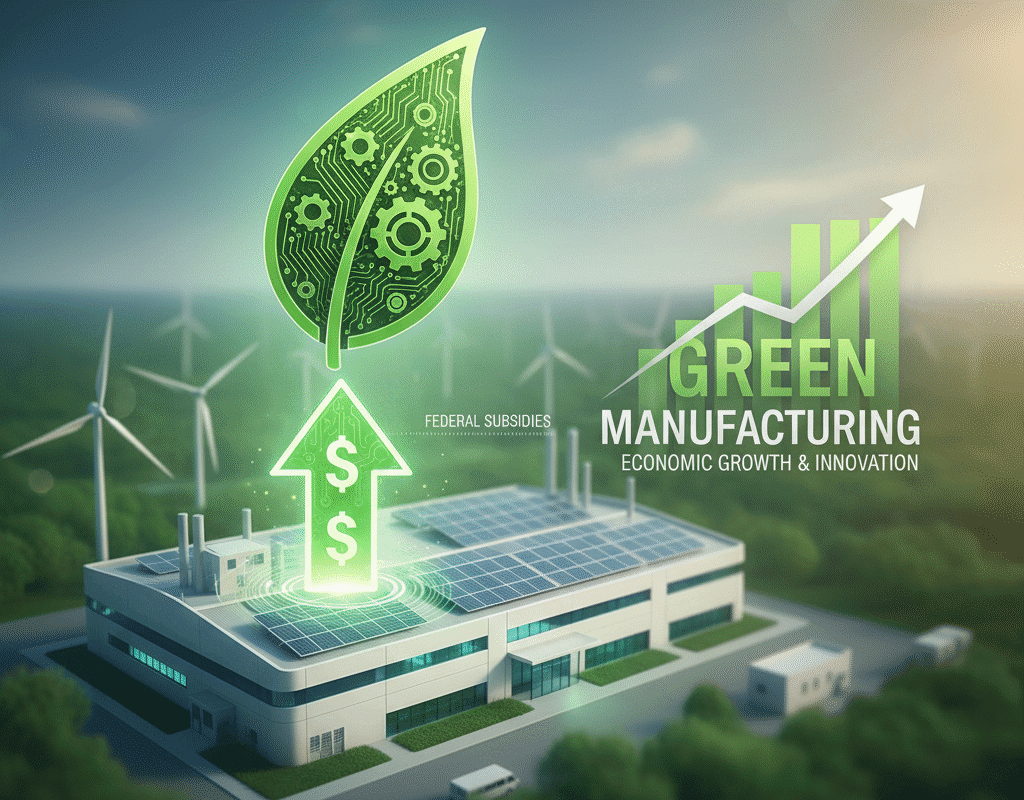
The Economics of Federal Subsidies for Green Manufacturing:
The Economics of Federal Subsidies for Green Manufacturing:
In recent years, the push toward sustainability and renewable energy has become a cornerstone of U.S. industrial policy. One of the most significant tools the federal government employs to accelerate this transformation is the provision of subsidies for green manufacturing.
These subsidies, often aimed at promoting clean energy, sustainable production methods, and advanced technologies, have profound economic implications. This article explores the economics behind federal subsidies for green manufacturing, examining their benefits, challenges, and long-term impacts on the U.S. economy.
HSBC Cashback Credit Card 2025 – Benefits, Rewards & How to Apply?

Understanding Green Manufacturing Subsidies
Green manufacturing refers to the production of goods using processes that minimize environmental impact, reduce carbon emissions, and optimize resource efficiency. This can include producing electric vehicles, solar panels, wind turbines, energy-efficient appliances, and other clean technologies.
Federal subsidies for green manufacturing are financial incentives provided by the U.S. government to support companies in adopting sustainable practices or developing environmentally friendly technologies. These subsidies can take several forms, including:
- Direct grants for research, development, and production of clean technologies.
- Tax credits for companies investing in green machinery, energy efficiency, or renewable energy projects.
- Loan guarantees to reduce financing risks for sustainable manufacturing projects.
- Production incentives that reward companies for producing clean energy or energy-efficient products.
Obstacles and Reactions
While the benefits are substantial, federal subsidies for green manufacturing also face scrutiny and challenges:
Budgetary Expenses
Subsidies require federal spending or foregone tax revenue, raising questions about fiscal sustainability. Critics argue that some programs may benefit large corporations disproportionately, with limited impact on smaller manufacturers.
Market Distortion
By favoring certain industries or technologies, subsidies can distort market competition. There is a risk of “picking winners and losers,” where government choices may not align with market efficiency.
Implementation Complexity
Subsidy programs often involve complex application processes and compliance requirements, which can deter smaller firms from participating.
Risk of Dependency
Long-term reliance on subsidies could reduce incentives for companies to achieve efficiency or compete without government support.
Case Studies: The Use of Federal Subsidies
American Solar Manufacturing.
The Investment Tax Credit, which enables businesses to engage in domestic manufacturing rather than outsourcing overseas, has stimulated the rise of solar panel manufacture in the United States. These incentives have increased the production capacity of businesses like First Solar.
The Electric Vehicle Sector
By boosting demand for EVs and their parts, federal tax subsidies for EVs indirectly help manufacturers. Increased manufacturing and technological innovation benefit companies that make batteries, motors, and charging infrastructure.
Growth of Wind Energy
Because local manufacturers are encouraged to supply turbines, blades, and related components, the Production Tax Credit for wind energy has been crucial in making wind farms in the United States economically feasible.
Long-Term Economic Implications
Federal subsidies for green manufacturing are not merely short-term interventions. Over the long term, they can reshape the economic landscape by:
- Creating a Sustainable Industrial Base: Establishing green manufacturing as a core part of U.S. industry ensures long-term competitiveness.
- Reducing Dependence on Fossil Fuels: Subsidies help diversify energy sources, stabilizing energy costs and mitigating geopolitical risks.
- Catalyzing Private Investment: Government support often attracts additional private funding, magnifying the economic impact.
- Supporting Climate Goals: Aligning industrial growth with environmental targets reduces future costs associated with climate change and regulatory compliance.
Suggestions for Policy
To maximize the benefits of federal subsidies for green manufacturing, policymakers could consider:
- Targeting Emerging Technologies: Focus on next-generation clean technologies with high potential for growth and job creation.
- Ensuring Equitable Access: Simplify application processes for small and medium-sized enterprises to prevent concentration of benefits among large corporations.
- Regular Impact Assessment: Conduct thorough economic and environmental assessments to evaluate program effectiveness and adjust policies as needed.
- Encouraging Public-Private Partnerships: Leverage federal funding to attract private investment in green manufacturing.
- Phase-Out Plans: Implement gradual reduction of subsidies as industries mature to prevent long-term dependency.
In conclusion: The Economics of Federal Subsidies for Green Manufacturing
A crucial nexus of sustainability, innovation, and economics is represented by federal incentives for green manufacturing. By lowering financial barriers, promoting research, and encouraging investment, these subsidies help create a more resilient, competitive, and environmentally friendly industrial sector. While challenges exist, careful policy design can maximize economic benefits while supporting the United States’ transition to a greener economy.
The economics of green manufacturing subsidies highlight a crucial lesson: strategic government intervention can catalyze both economic growth and environmental stewardship, ensuring that the U.S. remains a global leader in sustainable innovation.