 A K
A K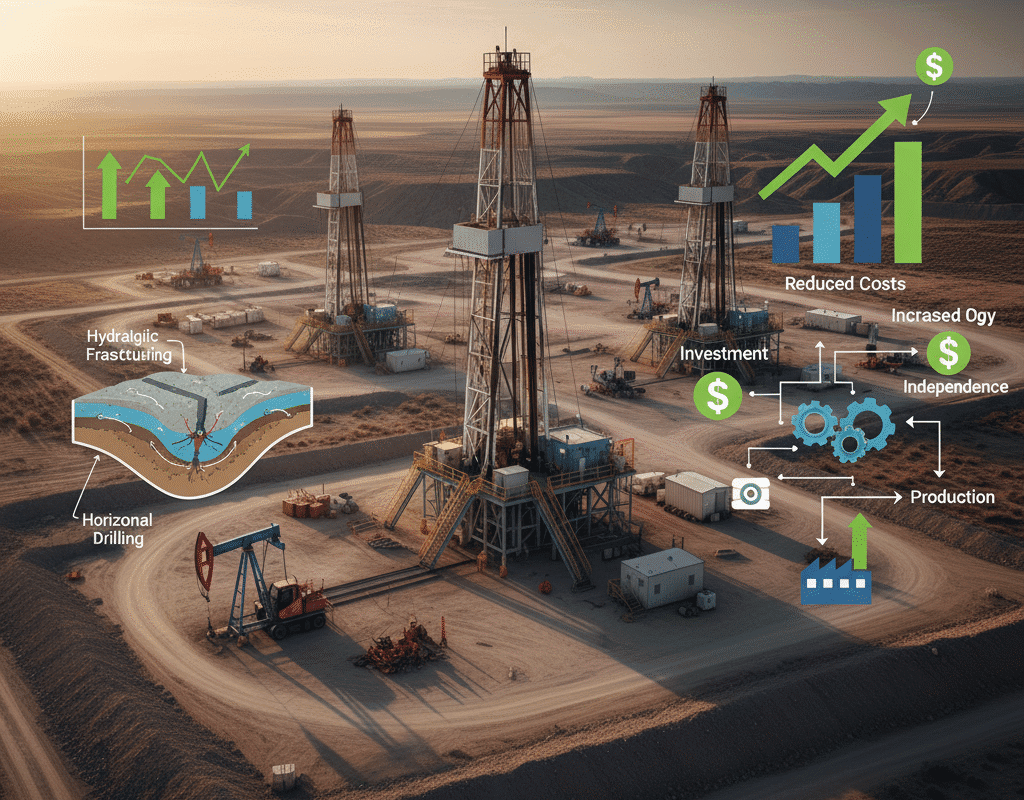
The Economics of American Shale Production
The Economics of American Shale Production
American shale production has transformed the global energy landscape more dramatically than almost any technological or industrial shift in the last half-century. What began as a niche extraction technique has evolved into one of the world’s most important energy drivers, reshaping oil markets, altering geopolitical power balances, and reconfiguring economic strategies both inside and outside the United States. Today, the economics of shale production stand at the center of discussions about global oil supply, domestic job growth, energy security, and the long-term transition to cleaner energy sources.
This article examines the cost structure, market forces, investment patterns, technological advances, and economic implications of American shale production, offering a comprehensive overview suitable for modern journalism, financial readers, and energy analysts.
HSBC Cashback Credit Card 2025 – Benefits, Rewards & How to Apply?

The Growth of American Shale: A Revolution Driven by Market Opportunity and Technology
Prior to the shale boom, it was anticipated that the US would always be a major importer of crude oil. As two crucial technologies advanced in the early 2000s, the story shifted:
- Wells can reach thousands of feet laterally thanks to horizontal drilling.
- Oil and natural gas can be extracted from impermeable shale rock using hydraulic fracturing.
These methods made it possible to access enormous reserves that were previously thought to be unprofitable. The result was explosive growth:
- The U.S. became the world’s largest producer of crude oil, surpassing Saudi Arabia and Russia.
- Shale regions such as the Permian Basin, Bakken, and Eagle Ford became global energy centers.
- Increased supply reshaped global oil prices and undermined OPEC’s long-standing market dominance.
The Role of Shale in U.S. Energy Independence and Geopolitics
One of the most significant economic outcomes of the shale boom is its impact on U.S. energy independence. Increased domestic production reduces reliance on foreign oil and strengthens the nation’s geopolitical position.
2.1 Reduced Import Dependence
The U.S. has dramatically reduced net oil imports, providing insulation against global supply disruptions.
2.2 Influence on Global Markets
By producing large amounts of oil and liquefied natural gas (LNG), the U.S. can:
- Compete directly with traditional exporters
- Influence global pricing mechanisms
- Support allies through energy exports
- Shale production thus has both economic and diplomatic implications.
Future Outlook: What Will Shape the Economics of Shale Going Forward?
While the shale industry remains strong, several factors will dictate future profitability and production levels.
3.1 Remaining Inventory
Analysts debate how much high-quality drilling inventory remains in mature basins like the Permian. As top-tier drilling locations decline, costs may rise.
3.2 Technological Innovation
Continued progress in drilling efficiency, automation, and enhanced recovery techniques will be crucial to maintaining competitiveness.
3.3 Global Oil Prices
Shale remains price-sensitive. Future economics depend heavily on long-term energy demand and global market trends.
3.4 ESG and the Energy Transition
The global transition to renewable energy introduces long-term uncertainty. While oil and gas will remain critical for decades, investment pressures may shift toward lower-carbon technologies.
Conclusion: The Economics of American Shale Production
The economics of American shale production have reshaped the U.S. energy landscape and global oil markets. The industry’s flexibility, technological advancement, and increasing efficiency have positioned the United States as a dominant force in global energy.
Looking forward, the shale sector will continue to evolve under the influence of:
- Technological innovation
- Environmental pressures
- Consumer demand
- Financial discipline
- Global oil price dynamics
Regardless of future energy transitions, the economic influence of shale production will remain central to American industry, employment, investment, and energy security for many years to come.
How the U.S. Credit-Card Industry Drives Consumer Spending and Shapes the Modern Economy
How the U.S. Credit-Card Industry Drives Consumer Spending and Shapes the Modern Economy