 A K
A K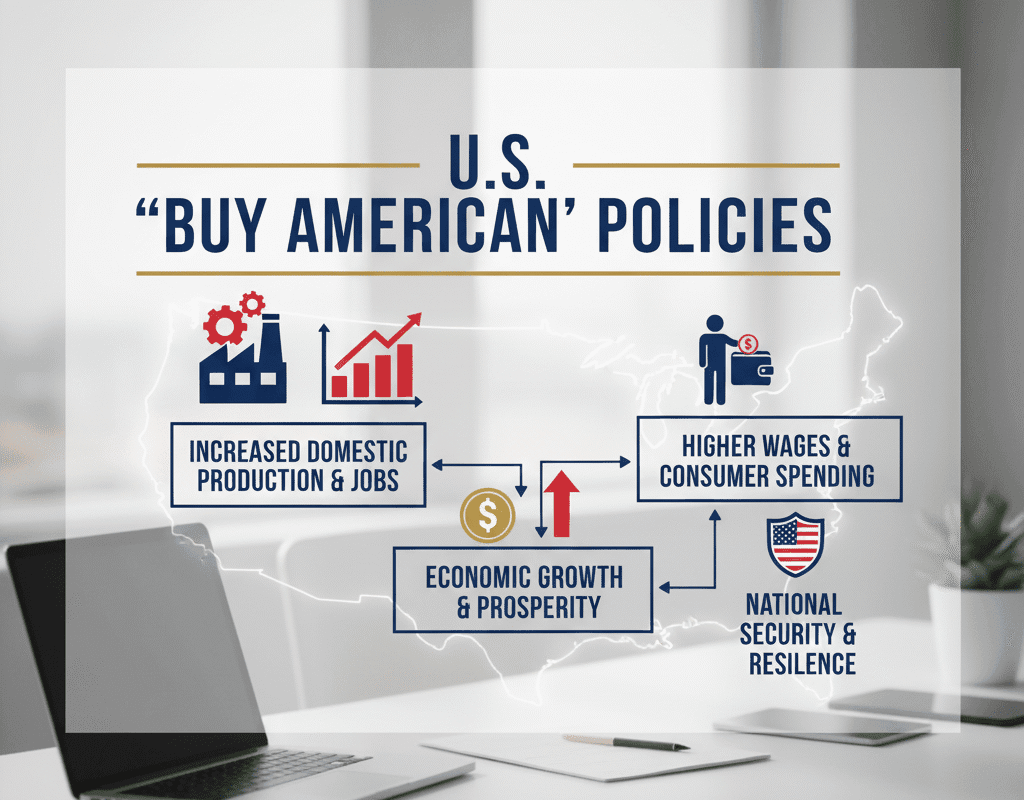
The Economic Logic Behind U.S. “Buy American” Policies?
The Economic Logic Behind U.S. “Buy American” Policies?
The “Buy American” policy is a cornerstone of U.S. economic and trade strategy, emphasizing the prioritization of domestically produced goods in government procurement and promoting American manufacturing. This initiative, though rooted in the early 20th century, has seen a resurgence in recent years, particularly under administrations keen on bolstering domestic employment and industrial capacity. While often viewed through a political lens, the economic rationale behind these policies is complex and multi-faceted, involving considerations of job creation, industrial resilience, and national security.
HSBC Cashback Credit Card 2025 – Benefits, Rewards & How to Apply?

Origins of the Buy American Policy
The roots of the “Buy American” concept trace back to the Buy American Act of 1933, enacted during the Great Depression. At a time when the U.S. economy was grappling with widespread unemployment and industrial stagnation, the government sought to stimulate domestic production by mandating that federal agencies purchase American-made products whenever possible. The act was intended not only to provide immediate economic relief but also to cultivate a long-term industrial base capable of supporting national growth.
Over the decades, “Buy American” policies have evolved to reflect changing economic and political contexts. The 1970s and 1980s, characterized by globalization and increasing imports, challenged the effectiveness of these policies.
Modern Adaptations: Buy American in the 21st Century
Recent U.S. administrations have expanded and modernized Buy American initiatives. President Biden’s administration, for instance, has emphasized domestic content requirements in federal infrastructure projects, renewable energy development, and healthcare procurement. The aim is not only economic growth but also promoting sustainability, innovation, and resilience in critical sectors.
The Inflation Reduction Act of 2022, for example, included provisions to incentivize American-made clean energy technologies. These modern adaptations signal that Buy American policies are evolving to address contemporary economic and environmental challenges while still adhering to the core principle of supporting domestic industry.
Global Context and Implications
Buy American policies exist within a broader context of economic nationalism and protectionism seen in many countries. Similar policies in the European Union, Japan, and India reflect a global trend where governments seek to safeguard domestic industries against the uncertainties of globalization.
While such policies can strengthen domestic economies, they also risk fragmenting global trade networks if applied excessively. The key lies in achieving a balance: promoting domestic production without undermining international cooperation and competitiveness.
Case Studies and Economic Evidence
Empirical studies provide mixed but generally positive evidence on the economic impact of Buy American policies. Analyses of U.S. federal procurement data show that targeted domestic sourcing can increase domestic employment and output in certain industries, particularly construction, defense, and machinery manufacturing.
A notable example is the American Recovery and Reinvestment Act of 2009, which included provisions to prioritize domestic goods in infrastructure spending. The initiative helped stimulate local manufacturing and construction jobs during the economic recovery from the Great Recession.
Outlook for the Future
The future of Buy American policies will likely depend on balancing domestic priorities with international trade obligations. Emerging technologies, green energy initiatives, and post-pandemic supply chain strategies provide opportunities to modernize and optimize these policies.
Policymakers will need to continue evaluating the economic trade-offs, including job creation, cost implications, industrial competitiveness, and geopolitical considerations. With strategic implementation, Buy American policies can remain a vital tool in fostering economic resilience, national security, and sustainable growth.
In conclusion: The Economic Logic Behind U.S. “Buy American” Policies
The economic logic behind U.S. Buy American policies is rooted in the desire to stimulate domestic manufacturing, create jobs, and strengthen supply chains. While challenges such as higher costs and potential trade tensions exist, careful policy design can mitigate these risks.
Modern adaptations reflect a growing emphasis on resilience, sustainability, and strategic autonomy, ensuring that Buy American remains relevant in a globalized economy. Ultimately, these policies highlight the delicate balance between protecting domestic interests and engaging in a competitive global market, a balance that will shape America’s economic strategy in the years to come.
How Disability Benefits Are Determined in the U.S.: A Comprehensive Guide
How Disability Benefits Are Determined in the U.S.: A Comprehensive Guide