 A K
A K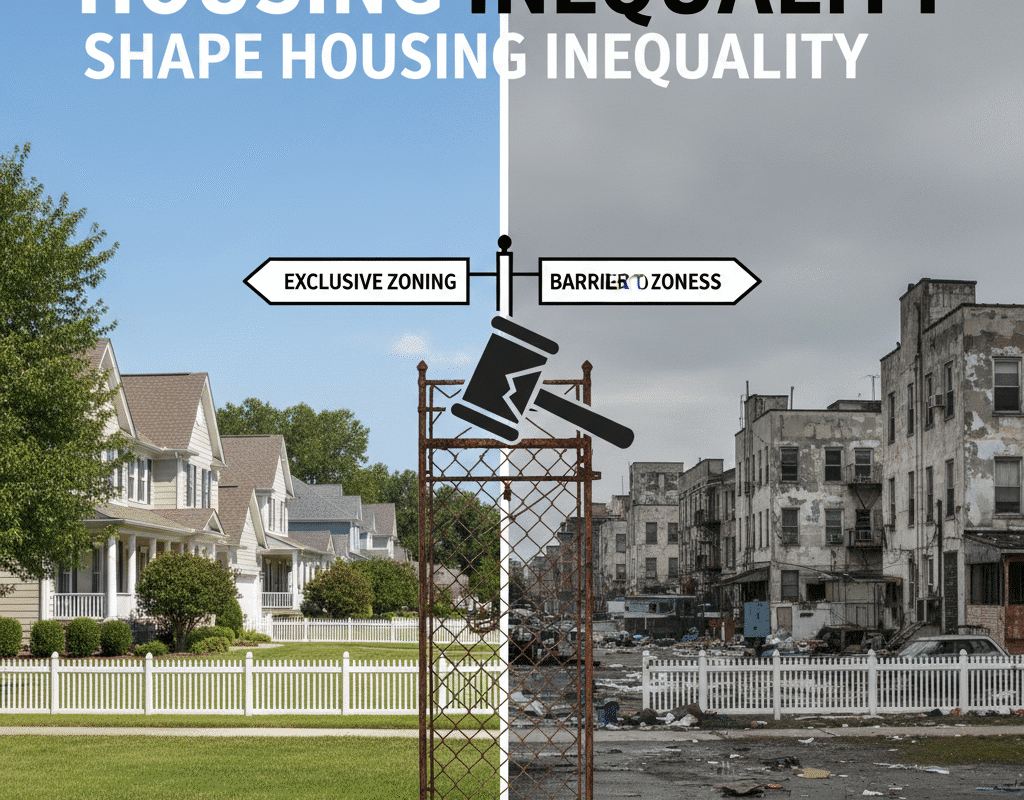
How Zoning Laws Shape Housing Inequality?
How Zoning Laws Shape Housing Inequality?
In debates about America’s housing crisis, attention often centers on rising rents, shortages of affordable homes, or escalating interest rates. Yet a deeper, more structural force sits beneath these visible symptoms: zoning laws. These local rules govern what can be built, where, and for whom—and they have quietly shaped the economic and social landscape of every American community for more than a century.
While zoning originally emerged to address public health, safety, and urban order, it has evolved into a policy tool with profound consequences for housing affordability, racial and economic segregation, and intergenerational mobility. Understanding zoning laws is essential to understanding why millions of Americans struggle to find housing near good schools, stable jobs, and thriving neighborhoods.
HSBC Cashback Credit Card 2025 – Benefits, Rewards & How to Apply?

The Role of NIMBY Politics (“Not In My Backyard”)
Local opposition to development—often referred to as NIMBYism—plays a powerful role in maintaining restrictive zoning. Common objections include:
- Traffic concerns
- Neighborhood character
- Environmental impact
- School capacity
Yet many of these concerns are used rhetorically to resist any multifamily or affordable housing, even when evidence shows that well-planned density can improve infrastructure, sustainability, and economic growth.
The Modern Impact: How Zoning Creates Housing Inequality Today
Even though overtly discriminatory laws are illegal today, the legacy—and effects—of zoning remain powerful. Modern zoning laws influence inequality in several key ways:
Zoning Reinforces Racial and Economic Segregation
Zoning laws have long been used to preserve the “character” of affluent neighborhoods—a phrase that often masks efforts to preserve racial and economic homogeneity.
Single-family zoning limits who can afford to move into certain areas. Because wealth in the U.S. is closely tied to race, these rules disproportionately limit housing access for Black, Latino, and immigrant families.
As a result:
- School segregation persists
- Access to high-opportunity neighborhoods remains stratified
- Wealth-building through homeownership is limited for historically marginalized groups
Zoning has become one of the last structural barriers perpetuating segregation—even as overt discrimination is illegal.
Zoning Increases Homelessness and Housing Instability
High rents and home prices push many households into cost burdens, overcrowded living conditions, or forced relocations.
In regions where zoning severely restricts new construction, research shows higher rates of:
- Evictions
- Homelessness
- Housing insecurity
The issue is not simply a lack of homes—but a systemic blocking of where homes could have been built.
Younger generations and renters are burdened by zoning
Younger adults encounter a situation in which:
- Rare are starter homes.
- There are few new units available.
- Rents and prices increase more quickly than earnings.
Zoning’s preference for large-lot, single-family homes overlooks modern housing needs—creating a generational imbalance where younger Americans are locked out of the housing market.
Case Studies: How Zoning Shapes Inequality Across the U.S.
California: High Demand Meets Tight Regulation
Housing shortages have existed for decades as a result of California’s cities’ stringent zoning laws that restrict multifamily housing. Although recent changes have attempted to remedy this, there are still significant issues with affordability.
Minnesota: A Reform-Leading State
When Minneapolis eliminated single-family zoning throughout the city, it attracted national notice. According to preliminary findings, home development has grown and neighborhood access has expanded.
New England: Where Density Is Resisted by Historic Towns
States like Connecticut and Massachusetts face deep-rooted zoning obstacles tied to the preservation of small-town aesthetics—along with some of the nation’s highest housing costs.
Zoning for Inclusion: A Partial Fix
Inclusionary zoning, which mandates that developers include affordable apartments in new projects or contribute to housing funds, has been implemented in several places.
But:
- These regulations provide marginal assistance.
- They are unable to completely get around limitations that completely prohibit construction.
- Their performance varies greatly between municipalities.
Inclusionary zoning frequently functions best in conjunction with more comprehensive reforms that increase the overall supply of homes.
The Difficulties of Reform: Economic and Political Opposition
Reforms, even those with broad support, encounter strong opposition because
- Homeowners worry that property values may drop.
- Property taxes are essential to local governments.
- Locals are concerned about traffic and overcrowding in schools.
- Sometimes, developers are against changes that create uncertainty.
Because zoning reform necessitates facing powerful political interests, housing inequity still exists.
Conclusion: How Zoning Laws Shape Housing Inequality?
At the nexus of housing, fairness, economy, and community identity are zoning rules. Though frequently undetectable, their influence is always potent. Zoning may provide opportunity, encourage affordability, and improve areas if it is planned inclusively. It will restrict access to the American ideal and perpetuate inequality if nothing changes.
The national discourse has changed; zoning is now seen as a crucial factor in determining opportunity and fairness rather than as a dry municipal matter. The decisions taken in the upcoming years could shape the nation’s housing environment for decades as more states and towns reconsider their land-use regulations.
How Student Loan Interest Deductions Shape Borrowers’ Finances in 2025
How Student Loan Interest Deductions Shape Borrowers’ Finances in 2025