 A K
A K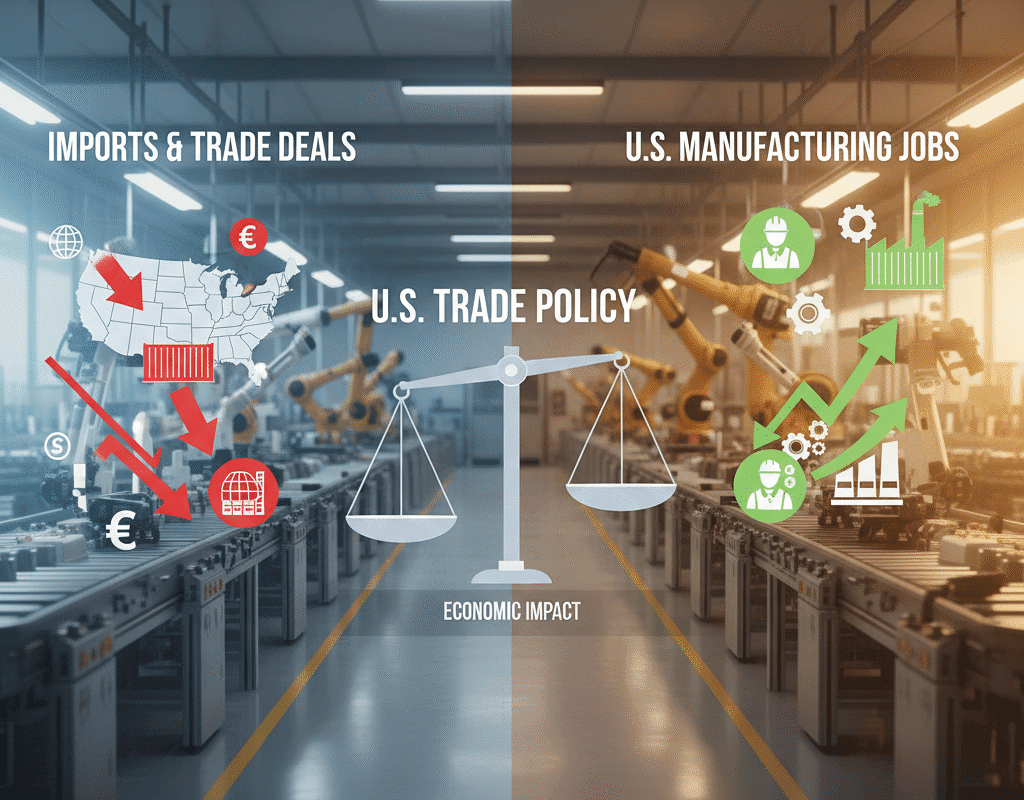
How U.S. Trade Policy Impacts Manufacturing Jobs?
How U.S. Trade Policy Impacts Manufacturing Jobs?
The American manufacturing sector has long been a cornerstone of the U.S. economy, providing millions of jobs and contributing significantly to GDP. However, in recent decades, U.S. trade policy has played a pivotal role in shaping the fortunes of manufacturing employment. From trade agreements to tariffs, from globalization to reshoring initiatives, every policy decision reverberates through the sector, affecting workers, companies, and communities.
HSBC Cashback Credit Card 2025 – Benefits, Rewards & How to Apply?

The Historical Context of U.S. Trade Policy
U.S. trade policy has evolved significantly since the mid-20th century. In the post-World War II era, trade policies were designed to encourage global commerce while protecting domestic industries.
The establishment of institutions like the General Agreement on Tariffs and Trade (GATT) and later the World Trade Organization (WTO) paved the way for the U.S. to integrate into a global trading system.
During the late 20th century, trade agreements such as the North American Free Trade Agreement (NAFTA) and various bilateral treaties were instrumental in reducing barriers to trade. While these agreements expanded U.S. exports, they also facilitated outsourcing and the relocation of manufacturing jobs to countries with lower labor costs.
Tariffs’ Impact on Job Retention
In order to safeguard domestic industries, the United States levied tariffs on steel, aluminum, and other imports under the Trump administration. Economists have disagreed about these policies’ overall efficacy, even though they temporarily helped some industries.
Some manufacturing sectors benefited from increased demand for U.S.-produced materials, supporting jobs in steel and aluminum plants. However, industries reliant on imported components faced higher costs, which sometimes led to reduced output and employment.
The complex effects of tariffs illustrate that trade policy can both protect and threaten jobs simultaneously.
Employment in Manufacturing and Trade Deficits
When it comes to manufacturing jobs, the U.S. trade deficit—importing more goods than it exports—has been a major issue.
A large trade deficit can signal that domestic production is declining relative to consumption. While deficits are not inherently negative, persistent deficits in manufacturing-heavy sectors may correlate with job losses and industrial decline.
Case Study: The Effects of NAFTA on Employment
NAFTA, implemented in 1994, created a free trade zone among the U.S., Mexico, and Canada. While it increased trade flows, it also had uneven effects on employment:
- Positive Impacts: U.S. exporters gained access to larger markets, boosting employment in some industries.
- Negative Impacts: Certain manufacturing jobs, especially in automotive and textile sectors, shifted to Mexico due to lower labor costs, leading to significant job displacement in U.S. regions dependent on these industries.
NAFTA’s successor, USMCA, includes measures aimed at protecting American labor, such as wage requirements in automotive manufacturing, which could moderate job losses.
The Impact of China Trade on Manufacturing Jobs
Trade with China has been a contentious issue for U.S. manufacturers. While imports from China have provided consumers with affordable goods, they have also contributed to significant manufacturing job losses in the U.S., particularly in steel, electronics, and textile industries.
The U.S.-China trade war (2018–2020) and subsequent tariffs highlighted the tension between protecting domestic jobs and maintaining affordable supply chains. Companies often faced a dilemma: absorb higher costs or shift production to other countries, sometimes outside the U.S.
Automation and Trade Policy Relationships
It’s crucial to remember that manufacturing jobs are impacted by a variety of factors, including trade policy. Automation has dramatically altered the employment landscape. While trade liberalization may shift jobs overseas, technological advancements can reduce the number of workers needed even for domestic production.
Trade policy interacts with automation by influencing which industries remain viable in the U.S. A sector protected by tariffs might still see employment decline if production becomes increasingly automated.
Trade Policy’s Effects on the Region
Trade policy has different implications in different parts of the nation. When industry shifts overseas, historically manufacturing-dependent regions like the Midwest sometimes bear the brunt of job losses. On the other hand, regions with robust export-oriented businesses may experience increases in employment.
Policymakers trying to strike a balance between domestic employment protection and trade competitiveness must comprehend these regional variations.
The Future of U.S. Manufacturing Jobs
Looking forward, U.S. trade policy will continue to influence manufacturing employment, but it will interact with other factors such as technology, energy policy, and global economic trends.
Key trends to watch include:
- Reshoring and Nearshoring: Companies may increasingly locate production closer to U.S. markets.
- Sustainable Manufacturing: Environmental standards could shape which industries remain viable domestically.
- Diversification of Trade Partners: Reducing reliance on a single country like China may protect jobs and supply chains.
Conclusion: How U.S. Trade Policy Impacts Manufacturing Jobs?
U.S. trade policy has a profound and complex impact on manufacturing jobs. While trade liberalization has expanded markets and reduced costs, it has also contributed to job displacement in certain sectors. Tariffs, trade agreements, and reshoring initiatives are tools policymakers use to balance competitiveness with employment protection.
Ultimately, the interplay between trade, automation, and global economic shifts will continue to shape the future of American manufacturing. A nuanced approach—combining smart trade policy, worker support, and technological investment—offers the best path for sustaining manufacturing jobs in a rapidly changing world.