 A K
A K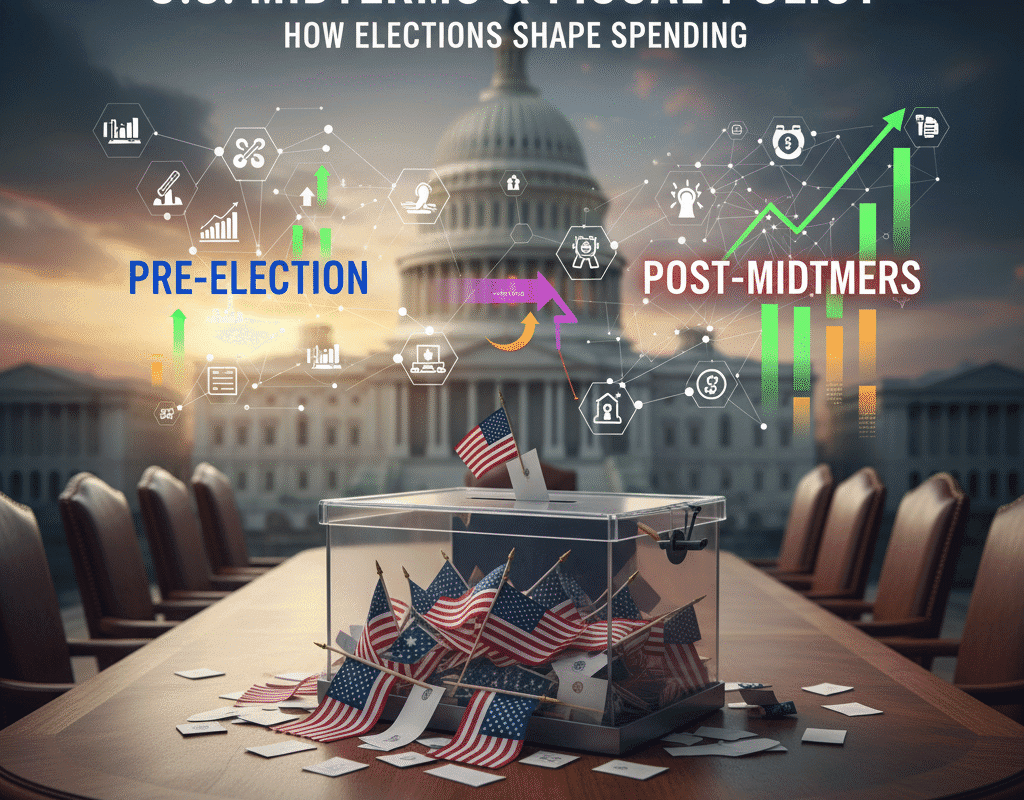
How U.S. Midterm Elections Shape Fiscal?
How U.S. Midterm Elections Shape Fiscal?
The U.S. midterm elections, held every two years, are more than just a political checkpoint; they are a decisive factor in shaping fiscal spending priorities that impact the country’s economy and society.
While presidential elections tend to dominate headlines, midterms determine control of Congress and, consequently, the direction of federal spending, taxation, and economic policies. Understanding how midterm election outcomes influence fiscal priorities is essential for policymakers, businesses, and citizens alike.
HSBC Cashback Credit Card 2025 – Benefits, Rewards & How to Apply?

The Connection Between Fiscal Spending and Midterm Elections
All 435 House of Representatives seats and around one-third of the Senate are usually up for election during midterms. Which political party has the legislative authority to enact laws, approve budgets, and regulate government spending is decided by these elections.
Fiscal objectives are strongly impacted by the makeup of Congress since legislators determine how public monies are distributed across a number of sectors, including infrastructure, healthcare, education, and defense.
In the past, midterm elections have frequently led to a change in power. As a public check on the executive branch, the non-presidential party regularly gains seats in Congress.
This change frequently results in a more cautious or strategically focused approach to budget allocation, which may have immediate effects on federal spending decisions.
Defense and Security Spending
National security is a major component of the federal budget, and midterm elections often have a direct impact on defense priorities. Changes in Congress can affect:
- Military Budget Allocation: Congress determines funding for the Department of Defense, including troop deployments, technology upgrades, and defense contracts.
- Foreign Policy Influence: Lawmakers play a critical role in approving foreign aid, military interventions, and strategic partnerships, all of which require significant fiscal resources.
- Cybersecurity Investments: With the growing threat of cyberattacks, midterm election results can shape the funding levels for cybersecurity initiatives and technological defense measures.
Social Programs and Healthcare
Social programs, including healthcare, education, and welfare initiatives, are highly sensitive to midterm election outcomes. Legislative control determines funding levels and policy direction:
- Healthcare Spending: Lawmakers decide on Medicare, Medicaid, and public health funding. A Congress favoring expanded healthcare access may increase spending, while a fiscally conservative Congress may seek reforms to reduce costs.
- Education Funding: Federal allocations for K-12 schools, higher education, and vocational programs can fluctuate depending on midterm results, directly affecting millions of students.
- Social Safety Nets: Programs like food assistance, unemployment benefits, and housing support are also influenced by election-driven fiscal priorities, impacting vulnerable populations nationwide.
Revenue Generation and Tax Policies
Midterm elections have an impact on both expenditure and the way the government collects taxes. Congress has the authority to change tax rules, which has an impact on fiscal priorities and budget planning:
- Corporate Tax Rates: Modifications to corporate tax rates may result from shifts in congressional authority, which may have an impact on economic expansion and company investment.
- Individual Tax Policies: Depending on the party in power in Congress, tax credits, capital gains taxes, and personal income taxes may change, which could have an effect on household finances.
- Investment Incentives: The results of elections have the potential to impact tax incentives for small enterprises, technology, and renewable energy, so influencing wider economic trends.
Economic Policy and Market Reactions
Financial markets closely watch midterm elections due to their potential impact on fiscal priorities and economic policy. Investors consider:
- Market Stability: Divided government may lead to uncertainty in fiscal policy, causing market volatility.
- Stimulus and Tax Legislation: Lawmakers’ decisions on stimulus packages, tax reforms, and spending cuts directly affect economic growth prospects.
- Long-Term Investment: Corporate planning and infrastructure investment often hinge on predictable fiscal policy, which can be disrupted by midterm election shifts.
Historically, markets may react differently depending on which party gains or loses seats, reflecting anticipated changes in spending, taxation, and regulation.
In conclusion: How U.S. Midterm Elections Shape Fiscal?
The U.S. midterm elections have far-reaching consequences beyond the political sphere, significantly affecting fiscal spending priorities. From federal budget allocations and defense spending to infrastructure projects, social programs, and tax policies, the composition of Congress determines how government resources are distributed. Historical patterns show that shifts in legislative power can lead to substantial changes in economic policy and public investment.
As voters head to the polls, it is essential to recognize that midterm outcomes directly influence not only political leadership but also the nation’s financial direction, impacting every sector of the economy and the daily lives of Americans. Understanding this connection equips citizens and policymakers to better anticipate and respond to the fiscal challenges and opportunities that lie ahead.
The Role of IRS Form W-4 and How It Impacts Your Paychecks in 2025
The Role of IRS Form W-4 and How It Impacts Your Paychecks in 2025