 A K
A K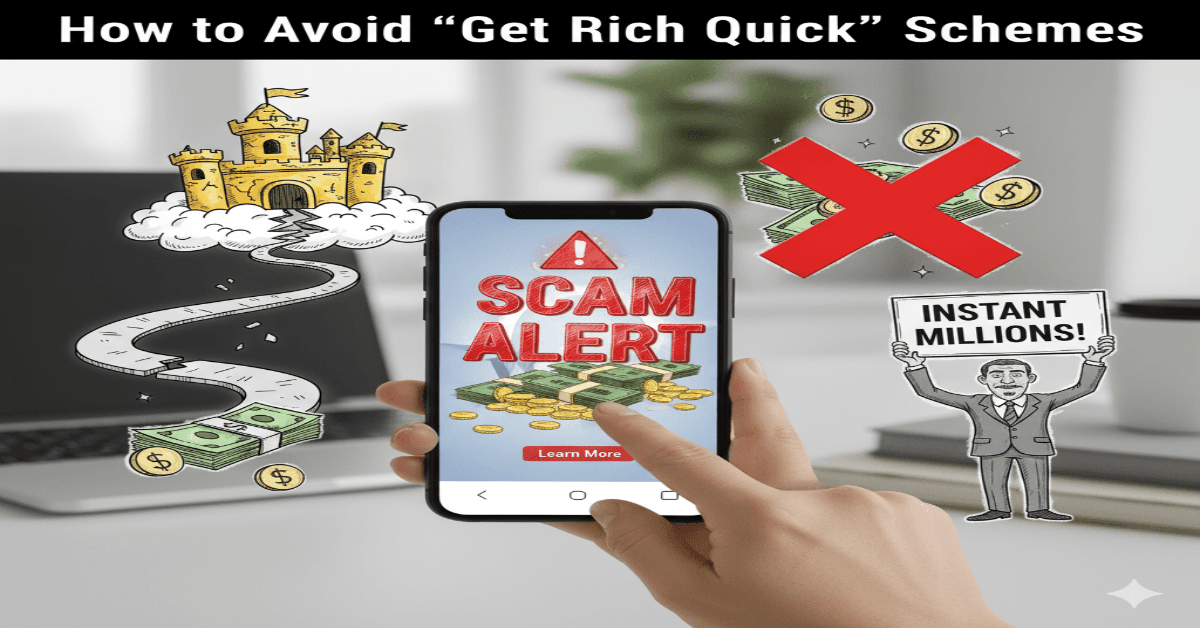
How to Avoid “Get Rich Quick” Schemes in 2025?
How to Avoid “Get Rich Quick” Schemes in 2025?
Promises of instant wealth abound in the fast-paced digital world of today, from gaudy social media advertisements to unwanted emails that say you can double your income in a week. Sadly, a lot of these offerings are “get rich quick” scams that prey on people’s financial aspirations.
With the rise of cryptocurrency, AI-driven advertising, and online investment platforms, scammers are getting more sophisticated, and it can be difficult to identify these false possibilities. Thus, in 2025, it will be more crucial than ever to recognize and steer clear of get-rich-quick schemes.
HSBC Cashback Credit Card 2025 – Benefits, Rewards & How to Apply?

A “Get Rich Quick” Scheme: What Is It?
Any program, opportunity, or pitch that promises enormous financial rewards in a short period of time with little work is considered a “get rich quick” scheme. While these schemes come in many forms, they share one common trait: unrealistic promises of wealth.
Key Characteristics:
- Unrealistic Returns – Claims of doubling or tripling your money quickly.
- Minimal Effort Required – “Make thousands while you sleep” is a classic slogan.
- Urgency and Pressure – “Act now before this opportunity disappears.”
- Lack of Transparency – Vague explanations of how the money is made.
- Recruitment Focus – Many schemes rely on bringing in more participants rather than selling a real product or service.
A Synopsis of “Get Rich Quick” Plans
For ages, scams have been around, changing along with society and technology.
- Gold rush scams and phony land transactions occurred in the 19th century.
- Ponzi scams, chain letters, and fraudulent stock investments were common in the 20th century.
- 1990s: Nigerian prince scams and email lottery scams.
- 2000s: MLM abuses and online pyramid schemes.
- 2010s: Binary trading scams, Bitcoin scams, and phony “work-from-home” offerings.
- 2020s: Crypto rug pulls, deepfake celebrity endorsements, and AI-driven frauds.
Typical “Get Rich Quick” Scheme Types
Ponzi schemes
These frauds, which were created by Charles Ponzi in the 1920s, use funds from new investors to compensate its original investors. When fresh members cease to join, the plan eventually falls apart.
Pyramid Schemes
Rather than selling actual goods, participants get money by bringing in new members. These nevertheless flourish online despite being prohibited in the United States.
Inauthentic Investment Possibilities
Scammers trick victims into purchasing fictitious stocks, real estate, or cryptocurrency ventures.
Scams involving work from home
Ads claiming you can earn thousands stuffing envelopes, assembling crafts, or filling out surveys often require an upfront fee—and deliver nothing.
Crypto Rug Pulls
False cryptocurrency initiatives create a lot of buzz about new coins, make millions of dollars, and then disappear overnight.
Scams by Social Media Influencers
Scammers use fake accounts or even deepfake technology to impersonate celebrities and promote fraudulent “investment tips.”
Warning Signs of a Scam
Guaranteed Returns Promises
There is never a risk-free lawful investment. If something seems too good to be true, it most likely is.
Pressure to Take Immediate Action
Scammers frequently use “limited-time offers” to trick you into hurrying without doing your homework.
Absence of information that can be verified
It’s a red flag if the business lacks a clear physical address, registration information, or an online presence.
Excessive Testimonial Use
False testimonies and reviews are widespread. Always double-check your sources.
Payment in Advance
Large “membership fees” or deposits are not required for legitimate employment or investing.
Professional Advice: How to Steer Clear of “Get Rich Quick” Schemes
Do Your Research Before Investing
- Check businesses with the Better Business Bureau (BBB) or the U.S. Securities and Exchange Commission (SEC).
- Check for complaints and reviews.
Never rely on returns that are guaranteed.
No investment is risk-free. Be cautious of anything promising high profits with zero risk.
Protect Your Personal Information
Avoid sharing sensitive details with unknown platforms.
Be Skeptical of Celebrity Endorsements
Scammers often fake endorsements with deepfake videos or impersonations.
Educate Yourself on Financial Literacy
The more you understand about money, the less likely you are to fall for scams.
Safe Alternatives to Build Wealth
Consider these acceptable approaches rather than looking for short cuts:
- Stock Market Investing – Long-term growth through index funds or ETFs.
- Real Estate – Renting or flipping properties with proper due diligence.
- Side Hustles – Freelancing, e-commerce, or digital services.
- Retirement Accounts – 401(k)s, IRAs, and other tax-advantaged plans.
- Certificates of Deposit (CDs) & Bonds – Lower returns but safe and stable.
In Conclusion
“Get rich quick” schemes may promise wealth and freedom, but they almost always lead to financial loss and heartbreak. In 2025, scammers are using more advanced tools—AI, crypto, and social media manipulation—to trap unsuspecting victims.
The good news? By staying informed, skeptical, and financially literate, you can protect your hard-earned money. Real wealth comes from patience, consistency, and smart financial planning—not shortcuts.
Stay cautious, do your research, and remember: if it sounds too good to be true, it probably is.
The Benefits of Minimalist Banking: How Simplified Finance is Transforming Money Management
The Benefits of Minimalist Banking: How Simplified Finance is Transforming Money Management