 A K
A K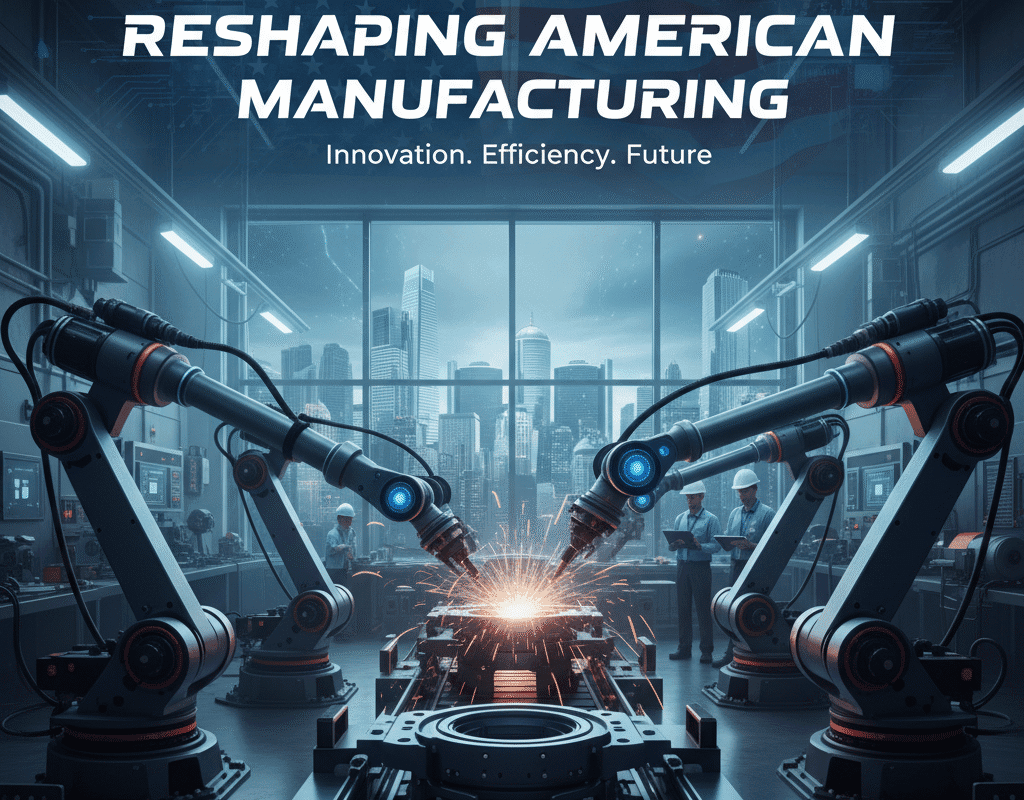
How Robotics Are Reshaping American Manufacturing?
How Robotics Are Reshaping American Manufacturing?
The landscape of American manufacturing is undergoing a monumental shift. Once reliant on large workforces performing repetitive tasks, U.S. factories are now embracing robotics and automation technology to drive efficiency, precision, and innovation. As global competition intensifies, American manufacturers are turning to robotics not just as a tool, but as a transformative force reshaping the industry.
Robotics in manufacturing has become synonymous with productivity gains, cost reduction, and enhanced safety. From automotive assembly lines to electronics production, robots are revolutionizing how products are designed, produced, and delivered to consumers. This shift is more than technological—it represents a profound evolution in workforce dynamics, business strategy, and industrial competitiveness.
HSBC Cashback Credit Card 2025 – Benefits, Rewards & How to Apply?

The Rise of Robotics in American Manufacturing
The U.S. has historically been a leader in manufacturing innovation, and robotics is the latest frontier. According to recent industry reports, the adoption of industrial robots in the U.S. manufacturing sector has grown by over 20% in the last five years.
Robots in manufacturing perform tasks ranging from assembly, welding, and painting to quality control, packaging, and logistics. These machines, often equipped with artificial intelligence (AI) and machine learning capabilities, offer precision, speed, and reliability beyond human capacity.
Robotics in Manufacturing’s Principal Advantages
- Enhanced Productivity and Efficiency
Robots enable 24/7 operations in factories by working nonstop without becoming tired. Robots produce consistently, in contrast to human labor, which results in increased production rates and decreased downtime. For example, robotic assembly lines have been deployed by electronics manufacturers to produce hundreds of products each hour with low defects.
- Improved Accuracy and Quality
By performing jobs with micron-level precision, industrial robots can significantly reduce faults and enhance product quality. Precision is crucial in sectors like aircraft and medical devices. Robotics minimizes material waste while guaranteeing adherence to stringent standards.
Changing the Workforce
The influence of robotics on employment is one of the main concerns. In addition to automating monotonous jobs, robots open up new avenues for robotics programming, engineering, and maintenance. The emergence of collaborative robots, sometimes known as “cobots,” is especially noteworthy since these devices collaborate with human workers rather than completely replacing them.
To give the American workforce the skills necessary to operate, maintain, and invent alongside robotic technology, training programs and educational activities are essential. To educate people for this new manufacturing era, organizations are investing in STEM education, vocational training, and collaborations with universities.
Innovation in American Manufacturing Driven by Robotics
In addition to enhancing current procedures, robotics allows for whole new production techniques.
- Integration of Additive Manufacturing: Robotics and 3D printing technologies enable previously unattainable complex designs and quick prototyping.
- Smart Factories: Robots with Internet of Things capabilities can interact with sensors and equipment to optimize production in real time, resulting in highly adaptable manufacturing settings.
- AI-Powered Quality Control: Robots can identify flaws, predict maintenance requirements, and dynamically optimize production schedules thanks to machine learning algorithms.
Challenges in Robotics Adoption
Despite the clear advantages, the widespread adoption of robotics comes with challenges.
- High Initial Costs: Small and medium-sized enterprises may struggle with the upfront expense of acquiring advanced robotic systems.
- Integration Complexity: Integrating robots into existing production lines requires careful planning and specialized expertise.
- Workforce Adaptation: Transitioning employees to new roles and ensuring adequate training can be a significant hurdle.
- Cybersecurity Risks: As manufacturing becomes increasingly connected, robotics systems can become targets for cyberattacks, necessitating robust security protocols.
In conclusion: How Robotics Are Reshaping American Manufacturing?
Robotics is a modern reality that is changing American production; it is no longer a future idea. Robotics is helping American manufacturers remain competitive in a global market that is changing quickly by improving efficiency, precision, safety, and creativity.
The long-term advantages of robots adoption are indisputable, despite ongoing difficulties with uptake and workforce adaption. The era of automated production lines, AI-powered robots, and smart factories has arrived for American manufacturing, and it holds out the prospect of expansion, innovation, and worldwide leadership.
How Federal Housing Vouchers Influence Local Rent Prices: A Comprehensive Analysis
How Federal Housing Vouchers Influence Local Rent Prices: A Comprehensive Analysis