 A K
A K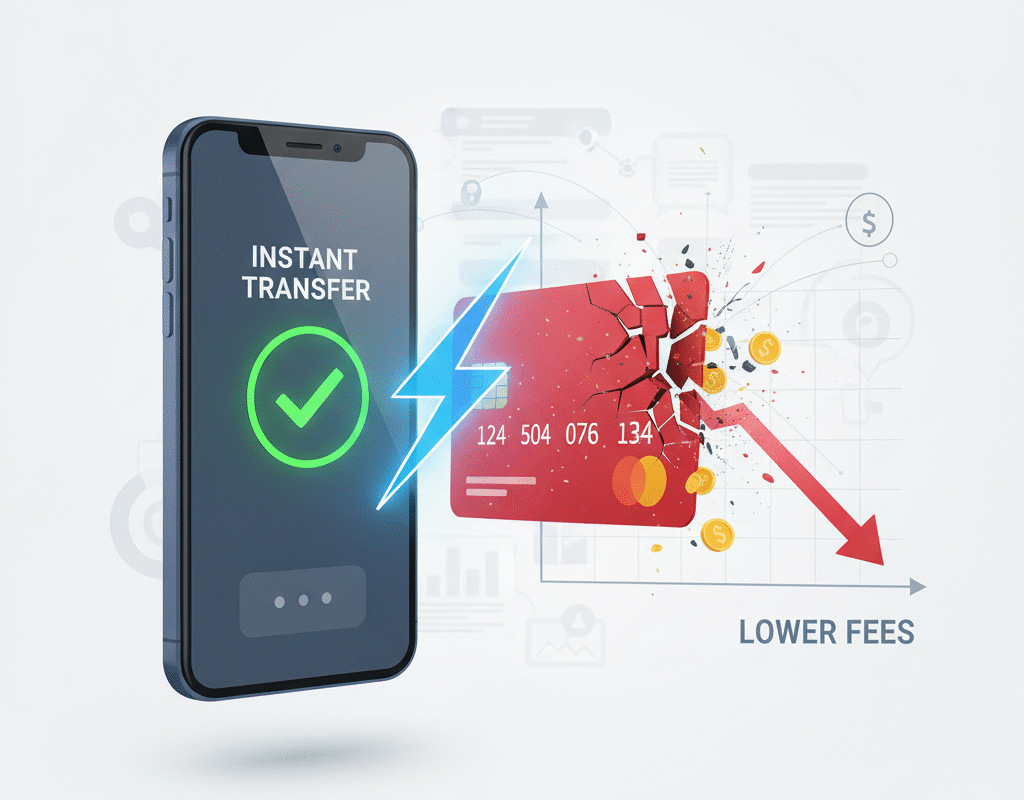
How Real-Time Payments Could Disrupt Credit Card?
How Real-Time Payments Could Disrupt Credit Card?
For decades, credit cards have dominated the U.S. payments ecosystem, powering trillions of dollars in annual spending. Their convenience, fraud protections, and rewards programs turned them into the preferred method of payment for millions of Americans.
But for the first time in a generation, this fee-driven model is facing a significant threat. The emergence of real-time payments (RTP)—instant bank-to-bank transfers facilitated by new infrastructures such as FedNow and The Clearing House’s RTP network—has the potential to dramatically shift power away from card networks and toward banks, fintechs, and merchants.
HSBC Cashback Credit Card 2025 – Benefits, Rewards & How to Apply?

Why Real-Time Payments Threaten the Credit Card Fee Model
- Interchange Fees Are a Major Revenue Source
Credit card fees—often between 1.5% and 3.5% per transaction—are a lucrative profit center for Visa, Mastercard, and card-issuing banks. These fees cover fraud protection, rewards, back-end operations, and profit margins.
- Merchants Want Cheaper Payment Alternatives
Retailers have battled credit card networks for decades, calling fees a “tax on commerce.” Many merchants, especially small businesses, would adopt cheaper real-time payment options if consumers embraced them.
What Attracts Businesses to Real-Time Payments?
- Reasonable R Acceptance Fees
Every year, credit card acceptance costs businesses billions of dollars. It’s tolerable for high-margin industries, but it’s a drag for low-margin merchants like grocery stores and gas stations.
- Decreased Risk of Fraud
Real-time payments rely on strong authentication and direct bank-to-bank rails, minimizing the common fraud vectors associated with card networks.
- No Chargebacks
Chargebacks cost merchants time and money. RTP eliminates this issue entirely, replacing it with structured dispute processes conducted directly between banks.
How FedNow Modifies the Competitive Environment
FedNow’s democratization of fast payments makes it particularly important. The payment experience is no longer dominated by large banks and card networks.
Among the main benefits are:
- 24/7/365 accessibility
- Everyone has access to banks
- Minimal transaction costs
- Government-backed dependability
What This Signifies for Retailers
The biggest beneficiaries are merchants:
- Reduced expenses for processing payments
- Quicker payment in cash
- decreased danger
- Chargeback elimination
- Improved customer experience with instant transactions
The ability to pass savings directly to consumers could create positive public perception.
Will Credit Cards Be Replaced by Real-Time Payments?
Not completely, or at least not anytime soon.
Credit cards are still necessary for:
- Borrowing
- protection against fraud
- big purchases
- Reservations for travel
- Reward-oriented customers
However, RTP might drastically lower credit card usage in high-volume, low-margin industries like groceries, retail, and eating.
While real-time payments become the standard, credit cards may develop into a high-end payment method.
The Final Score: How Real-Time Payments Could Disrupt Credit Card?
Real-time payments represent one of the most significant shifts in the U.S. financial infrastructure in decades. Their potential to disrupt credit card fees is real—and growing.
As more merchants, banks, and consumers adopt instant payments, the traditional credit card model may face unprecedented pressure. While cards won’t disappear, their dominance may fade as cheaper, faster, and more efficient payment options take hold.
The next few years will determine how quickly real-time payments reshape the market—and how the industry adapts to a more open, competitive, and consumer-friendly financial landscape.
How U.S. Fiscal Multipliers Differ Across Income Groups: Economic Impacts Explained
How U.S. Fiscal Multipliers Differ Across Income Groups: Economic Impacts Explained