 A K
A K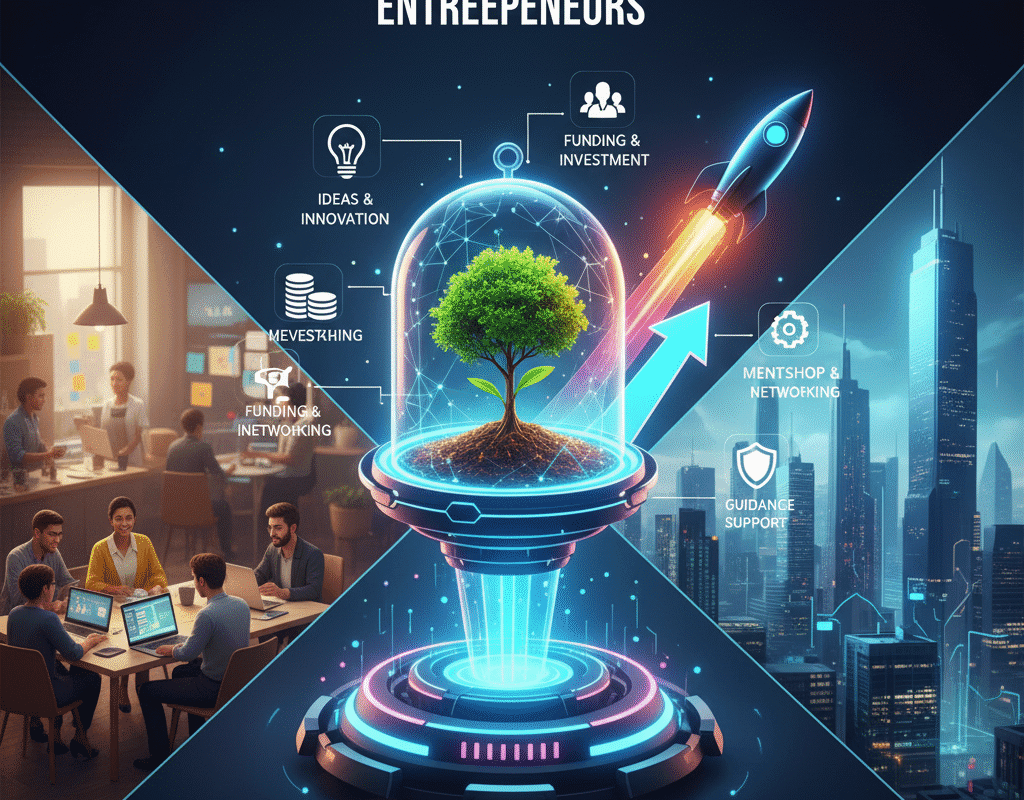
How Incubators and Accelerators Empower Entrepreneurs?
How Incubators and Accelerators Empower Entrepreneurs?
Over the past ten years, there has been a significant shift in the American entrepreneurial scene. The process of turning an idea into a successful business has grown more difficult as markets become more competitive and technology advances quickly. Today’s entrepreneurs deal with a variety of difficulties, such as a lack of capital, restricted market access, technology advancements, and inexperience with operations.
In this environment, incubators and accelerators have emerged as powerful engines of innovation, offering structured support to help startups grow faster, stronger, and smarter. These programs—once considered niche—are now mainstream pillars of America’s economic development strategy, fueling advancements in fields such as artificial intelligence, clean energy, biotechnology, smart manufacturing, and consumer technology.
HSBC Cashback Credit Card 2025 – Benefits, Rewards & How to Apply?

What Are Startup Incubators?
A business incubator is an organization designed to nurture early-stage companies by providing them with the time, space, and resources needed to grow slowly and sustainably. Unlike accelerators, which operate on a fixed schedule, incubators often allow startups to stay for one to three years, focusing on long-term development.
Key characteristics of incubators:
- Flexible timelines
- Access to office space, labs, and equipment
- Mentorship and business development guidance
- Networking opportunities with investors and industry experts
- Low-cost or subsidized operational support
- Ideal for idea-stage or early-development startups
What Are Startup Accelerators?
A startup accelerator is a highly structured, time-bound program that helps startups rapidly scale. Accelerators typically last 3–6 months and culminate in a “demo day,” where founders pitch to investors, including venture capitalists and angel networks.
Accelerators typically offer:
- Seed funding in exchange for equity
- Intensive training programs
- Expert mentorship
- Market access and partnerships
- Investor exposure
- A fast-paced growth environment
Accelerators are best suited for startups with a minimum viable product (MVP) and a scalable business model.
Why the Distinction Between Incubators and Accelerators Is Important
While both incubators and accelerators aid in the expansion of startups, their structures, goals, and results are different.
| Feature | Incubators | Accelerators |
| Best for | Idea-stage or early development | Startups with MVP ready |
| Duration | Long-term (1–3 years) | Short-term (3–6 months) |
| Funding | Often none | Seed funding common |
| Focus | Stability, refinement | Rapid scaling |
| Equity | Typically no equity required | Equity is often required |
| Goal | Build foundation | Accelerate market entry |
Understanding these differences helps entrepreneurs choose the program that aligns with their business model, maturity, and long-term goals.
How Incubators and Accelerators Empower Entrepreneurs
Access to Mentorship and Expertise
For many first-time founders, the lack of experience can be a major barrier. Incubators and accelerators address this by giving entrepreneurs access to:
- Industry veterans
- Experienced founders
- Technology leaders
- Legal and financial advisors
- Marketing and product development experts
Funding Opportunities and Investor Access
Funding is often the lifeline of any startup. Accelerators frequently offer seed investment, while incubators connect founders with:
- Angel investors
- Venture capitalists
- University funding networks
- Government grant programs
Collaboration and Networking
Entrepreneurship thrives in strong networks. Incubators and accelerators create vibrant communities where founders collaborate, share knowledge, and build strategic partnerships.
These environments help entrepreneurs:
- Connect with potential co-founders
- Form relationships with suppliers and customers
- Participate in innovation-driven events
- Learn from peer startups facing similar challenges
Training and Skill Development
Most programs offer workshops and courses covering essential business skills such as:
- Financial planning
- Leadership development
- Product management
- Branding and marketing
- Growth hacking
- Intellectual property management
Conclusion: How Incubators and Accelerators Empower Entrepreneurs?
Incubators and accelerators are no longer optional assets—they are foundational pillars supporting America’s entrepreneurial landscape. From lowering startup risks to increasing access to capital, mentorship, networking, and advanced resources, these programs provide a transformative pathway for anyone looking to build a successful business.
For entrepreneurs navigating the complexities of today’s innovation-driven economy, these programs offer not just support, but a strategic advantage. They reduce failure rates, speed up growth, and help create stronger, more resilient companies that contribute to national economic progress.
Why Property Taxes Differ So Widely Across States: Understanding the Key Factors
Why Property Taxes Differ So Widely Across States: Understanding the Key Factors