 A K
A K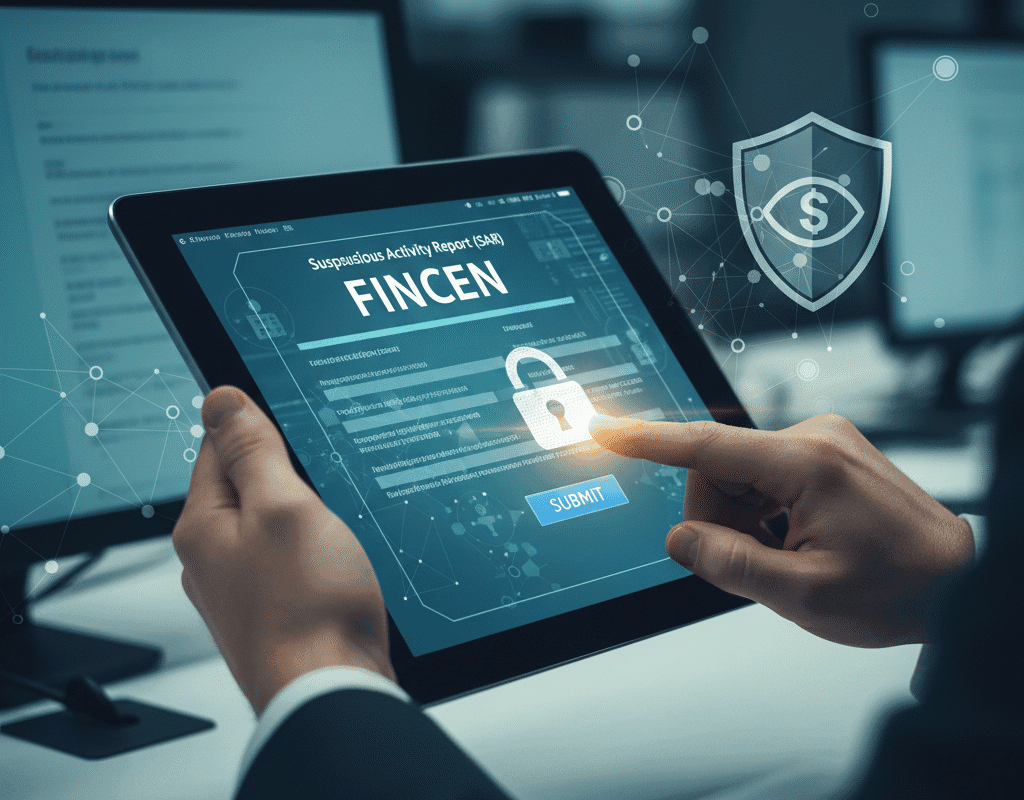
How Banks Report Suspicious Activity to FinCEN?
How Banks Report Suspicious Activity to FinCEN?
The United States’ anti-money-laundering and counterterrorism finance infrastructure heavily relies on banks and other financial institutions. These organizations are required to keep an eye out for and report suspicious conduct in accordance with the Bank Secrecy Act (BSA) and rules overseen by the Financial Crimes Enforcement Network (FinCEN).
HSBC Cashback Credit Card 2025 – Benefits, Rewards & How to Apply?

What Is a Suspicious Activity Report (SAR)?
A Suspicious Activity Report (SAR) is a document that a bank or financial institution files with FinCEN when it detects known or suspected violations of law or unusual behaviour in a customer’s account or transaction.
Key features of a SAR:
- Filing does not require that a crime has been proven — only that the institution knows, suspects, or has reason to suspect a violation or suspicious activity.
- The SAR must include details such as identity of persons involved, transaction description, why it is suspicious, etc.
- The SAR is confidential; the subject of the SAR must not be notified.
How Banks Spot Suspicious Activity: Red Flags & Monitoring
Establishing a BSA/AML Compliance Program
Before filing SARs, banks must have robust compliance programs: customer-due-diligence (CDD), know-your-customer (KYC), monitoring of transactions, suspicious-activity detection frameworks.
Monitoring & Identifying Red Flags
Banks use internal systems, statistical thresholds, pattern-detection, alerts and human review to identify transactions or behaviour that deviate from normal activity.
Examples of red-flags include: unusual deposits/withdrawals, structuring transactions to avoid reporting, frequent transfers to/from high-risk jurisdictions, transactions not consistent with a customer’s business, identity theft, account take-overs, etc.
What the SAR Must Contain
- Identification of person(s)/entity: names, dates of birth, addresses, account numbers, etc.
- Transaction details: amounts, dates, counterparties, account numbers, methods of transaction.
- Narrative description: why the activity is suspicious, red flags, context. This is key for law enforcement use.
- Boxes and check-lists: There are fields to check for types of suspicious activity (e.g., account takeover, wire fraud, ACH fraud) and narrative must explain.
- Institution role: Some forms ask for bank’s role (“selling location”, “paying location” etc) if applicable.
Repercussions of Failure to Comply
Serious repercussions may result from a bank’s failure to monitor or disclose suspicious behavior or to file the necessary SAR:
- FinCEN or financial regulators’ consent orders, fines, and regulatory enforcement.
- loss of public trust and harm to one’s reputation.
- increased scrutiny and the need for corrective action plans.
- Serious infractions may result in criminal responsibility.
For example, banks that fail to maintain effective AML programmes or fail to file SARs timely may face large penalties and public enforcement actions.
Recent Developments & Emerging Trends
- FinCEN continues to issue guidance to institutions around cross-border information-sharing and emerging threats.
- Growing use of analytics, AI and technology in the detection of suspicious activity — banks are adopting more sophisticated tools.
- Increasing complexity of illicit finance: cryptocurrencies, virtual assets, digital payments, layering techniques, global flows.
- Regulators emphasise that SARs filed must be high-quality (with compelling narrative and context) rather than simply high-volume.
- Banks under increasing pressure to show that their AML programmes are not just compliance-box ticking but effectively risk-based and intelligence-led.
A Practical Example of the Process
Imagine Bank X notices that Customer Y, a longstanding client with modest monthly deposits, suddenly receives multiple large incoming wire transfers from overseas entities and then quickly wires funds out. The compliance system triggers an alert.
The AML team investigates: the customer’s profile, business purpose, source of funds, counterparties.
They identify “structuring” and rapid movement inconsistent with business history. They determine suspicion of money-laundering or related illicit activity.
Bank X then prepares a SAR: includes customer identity, account activity, narrative describing why it’s suspicious (e.g., large inbound wires from high-risk jurisdictions, immediate outbound transfers, no clear business justification). They file electronically within 30 calendar days of detection.
Role of Bank Personnel: From Teller to Compliance Officer
- Front-line staff (tellers, branch staff, relationship managers): Identify initial red-flags (e.g., unusual cash deposit, third-party checks, change in behaviour). They escalate to compliance.
- AML/Compliance team: Investigate alerts, gather data, determine whether threshold for suspicion is met, prepare and file SAR, maintain documentation.
- Senior management/Board: Ensure institution has an effective BSA/AML programme, allocate resources, review trends, ensure internal controls.
- IT/Analytics: Deploy monitoring systems, generate alerts, assist in detection of anomalous patterns.
- Legal/Regulatory: Advise on filing obligations, confidentiality, record-keeping, interactions with regulators.
Confidentiality & Sharing of SARs
SARs are highly confidential. The bank cannot notify the customer, or any person involved, that a SAR was filed — that is known as “tipping off” and is prohibited.
However, a bank may share the SAR or associated information with an affiliate (if subject to SAR regulation) in order to monitor consolidated activities.
Regulators emphasise banks must treat SARs confidentially and must not use them as a basis to prematurely close accounts solely because of filing.
What Happens After Filing? FinCEN’s Use of SARs
Once a SAR is filed, FinCEN receives and stores the information, and makes it available (in aggregated or case-referral form) to law enforcement, regulatory agencies, and intelligence units. The SAR may trigger investigations, cross-referencing with other filings, or further regulatory action. The narrative and data submitted by the bank are critical for investigations.
Moreover, SAR data contribute to identifying emerging typologies of financial crime, reviewing trends, informing regulatory guidance, and strengthening the AML ecosystem.
In conclusion: How Banks Report Suspicious Activity to FinCEN?
Reporting suspicious activity to FinCEN via SARs is a cornerstone of U.S. efforts to combat money-laundering, terrorist finance and other financial crimes.
The process demands vigilance from banks, clear policies, timely action, high-quality reporting and strict confidentiality.
While the volume of SARs is large and the compliance burden significant, the ultimate goal is protecting the integrity of the financial system.
Why Gig Workers Lack Retirement Plans: Unpacking the Crisis in the Gig Economy
Why Gig Workers Lack Retirement Plans: Unpacking the Crisis in the Gig Economy