 A K
A K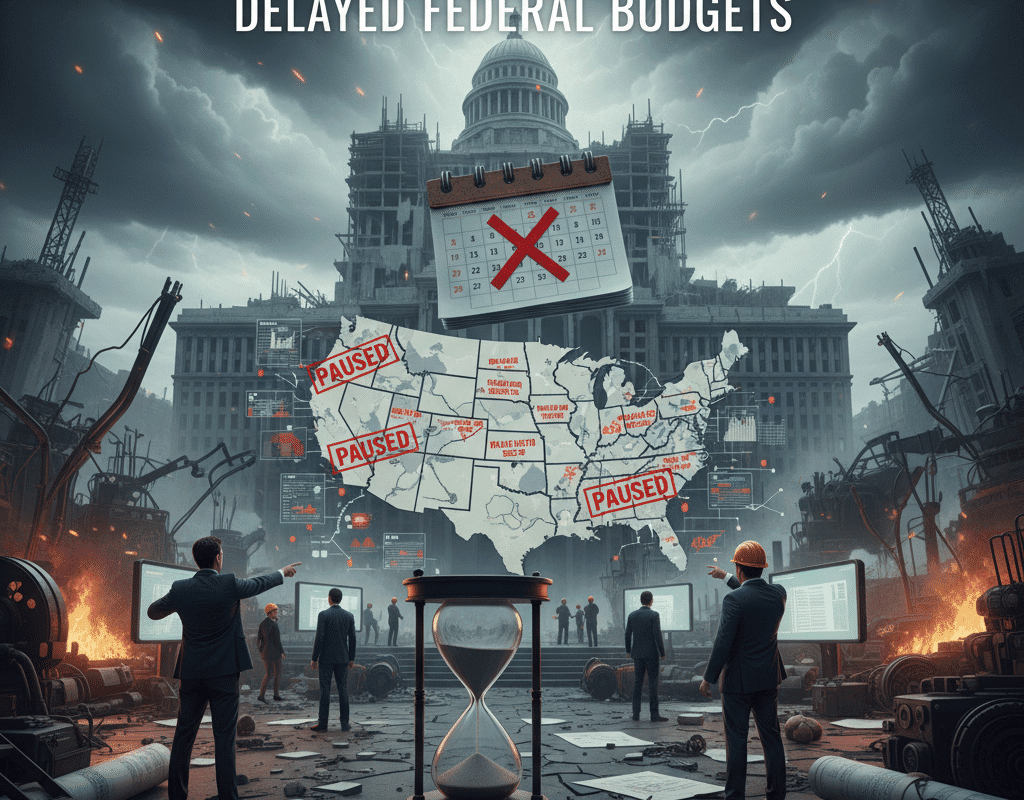
Economic Fallout of Delayed U.S. Federal Budgets:
Economic Fallout of Delayed U.S. Federal Budgets:
The consequences reach far beyond party deadlock when the federal government fails to approve its budget on schedule or when agencies are temporarily underfunded. Delays in federal budgets and funding can result in stopped paychecks, suspended services, delayed contracts, and slower economic growth, according to the Congressional Budget Office (CBO) and other researchers. In summary, the influence is significant, quantifiable, and widespread. The economic repercussions of the recent multi-week budget gap in the United States are already being calculated.
HSBC Cashback Credit Card 2025 – Benefits, Rewards & How to Apply?

Why Budget Delays Happen
The U.S. federal budget process requires Congress to pass appropriations bills (or a continuing resolution) to fund government operations. When that process breaks down, agencies may be unfunded, contracts stall and many workers are furloughed or work without pay. The 2025 shutdown, for example, began on 1 October when appropriations were not approved.
Delays often originate in political disagreements—over tax policy, healthcare subsidies, spending levels or ideological divides. The uncertainty created by the stalemate magnifies the ripple effects across the economy.
Impacts in the Short and Long Terms
It’s important to distinguish what is temporary (recoverable) and what may be permanent.
Short-Term / Recoverable
- Once funding resumes, many federal employees get back pay; contracts pick up; pent-up spending returns. For example, a portion of the lost output in Q4 may bounce back in Q1.
- Some delayed purchases (once confidence returns) may happen albeit later than planned.
Long-Term / Permanent Losses
- Hours of productivity missed during shutdowns cannot all be made up; the CBO estimates that some portion of output is permanently lost (~US$11 billion in one scenario).
- Deferred or canceled projects may never happen (e.g., business expansion delayed, travel not taken).
- Confidence effects: if households alter spending behaviour permanently or delay purchases, the multiplier effect is dampened.
The Multiplier Effect: Why Budget Timing Is Important
When budgets are passed on time and spending flows as planned, government outlays (salaries, procurement, grants) create a multiplier effect: money enters household hands, is spent in local economies, supports jobs, and ripples through supply chains. When budgets are delayed:
- The flow of funds stops or slows, reducing those multipliers.
- Delays create idle capacity (contractors, vendors waiting, services paused).
- Local economies that depend on federal payrolls or contracts feel the ripple acutely.
- Lower spending by households and firms translates into slower growth.
In other words: timely federal budgeting keeps the fiscal machine running, ensures predictable economic flows, and supports growth; delays undermine that mechanism.
Case Study: 2025 U.S. Budget Delay / Shutdown
The most recent example of a delayed federal budget in the U.S. provides a concrete illustration.
- On 1 October 2025, the federal fiscal year began without appropriations in place, triggering a shutdown of non-essential government operations.
- The CBO and other agencies estimated that a six-week shutdown could reduce Q4 real GDP growth by 1.5 percentage points.
- Estimates of permanent output loss ranged between US$7 billion and US$14 billion depending on duration of the shutdown.
- Federal workers missed paychecks, SNAP and other benefits were delayed, contracts stalled, and consumer confidence plunged.
- The data-blackout caused by the pause in official releases (jobs, inflation) complicated policy decisions by the Fed.
What Can Mitigate the Impact?
How can the economic fallout from budget delays be contained or mitigated? Several measures help:
- Shorten the delay: The sooner appropriations are approved, the smaller the window of lost output and the more recoverable the impact.
- Use contingency planning: Agencies maintaining reserves, payment systems ready to execute once funding resumes, and states prepared to absorb short-term shocks help reduce local damage.
- Prioritise payments: Ensuring critical benefit programs (e.g., food assistance) continue even during impasses preserves spending among vulnerable populations.
- Clear communication & data: Timely economic data and transparency help maintain confidence of businesses and markets despite disruptions.
- Contractor safeguards: Support for federal contractors and small business vendors can reduce ripple effects when federal outlays are delayed.
In conclusion: Economic Fallout of Delayed U.S. Federal Budgets
On the surface, a federal budget delay can seem like a political dispute, but the economy doesn’t wait. Delays in budgeting have a cascading effect on everything from small-business contracts to federal payrolls, from benefit payments to travel reservations. The recent example of the U.S. shows that tens of billions of dollars in growth can be lost, consumer confidence can slip, and the recovery may be only partial.
For stakeholders—from citizens and households to businesses and states—the message is clear: timely budget passage matters. The fiscal calendar is not an academic concern—it is a conduit of economic flow, livelihood and growth.
How Corporate Taxes Differ by State: A Guide to U.S. State-by-State Corporate Tax Rates (2025)
How Corporate Taxes Differ by State: A Guide to U.S. State-by-State Corporate Tax Rates (2025)