 A K
A K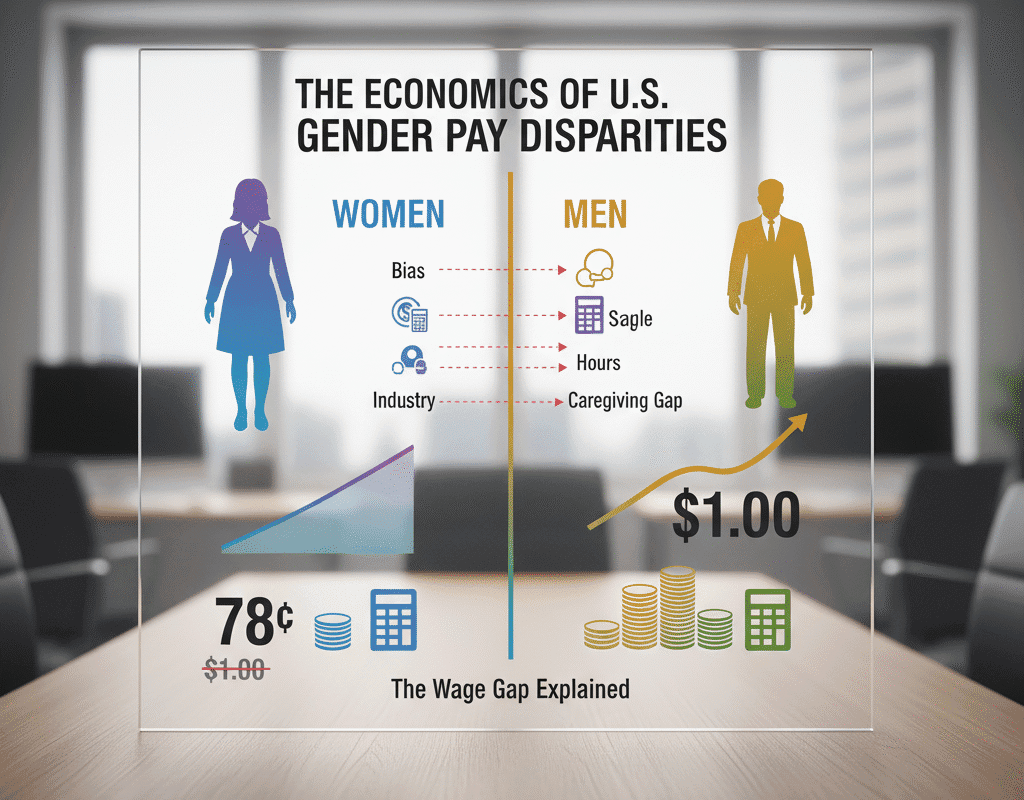
The Economics of U.S. Gender Pay Disparities
The Economics of U.S. Gender Pay Disparities
Due to deeply ingrained structural, cultural, and policy-driven causes, gender wage discrepancies continue to be a chronic economic burden in the United States. Women in the United States are still paid less for similar work than males, despite decades of agitation for equal pay. Recent data from the U.S. Census Bureau shows that women make around 82 cents for every dollar earned by men, with the gap growing for women of color.
In addition to being an issue of justice, economic inequality has a significant impact on consumer spending, productivity, and social equity in the US economy.
HSBC Cashback Credit Card 2025 – Benefits, Rewards & How to Apply?

The Historical Background of Gender Pay Inequalities
It is necessary to examine past patterns in order to comprehend the current situation of gender wage discrepancies. Women who entered the labor in the early 20th century were mostly restricted to low-paying positions in domestic services, schooling, and secretarial work.
The Equal Pay Act of 1963, which required that men and women be paid equally for equal labor, was a landmark piece of legislation. However, the law’s enforcement was limited, and structural barriers continued to hinder women’s earning potential.
The 1970s and 1980s saw the rise of women in professional and managerial roles, yet wage gaps persisted. Occupational segregation, societal expectations, and limited access to higher education and professional networks contributed to enduring disparities.
Current Statistics and Trends in the U.S. Gender Pay Disparity
In the United States, women make 82% of what males do on average as of 2024. This number varies significantly by race, industry, and level of education. For example:
- Wage disparities for women in typically male-dominated, high-paying fields like technology and finance surpass 25%.
- Women of color face compounded disparities: Black women earn approximately 64 cents and Latina women 57 cents for every dollar earned by white men.
- Compared to full-time employment, part-time work—which is overwhelmingly held by women—is paid much less.
Regional and Industry Differences
In the United States, the gender pay gap varies greatly between industries and geographical areas.
- The industries with the biggest pay disparities are technology and finance, in part because of the predominance of men in leadership positions and high-paying technical jobs.
- Although many women work in the healthcare and education sectors, their pay is typically lower, and professional advancement is frequently slower.
- Regional Differences: Compared to areas with fewer protections and lower minimum pay, states with greater living expenses and stricter labor laws, like California and New York, have smaller differences.
The Broader Economic Impact
Gender pay disparities are not just a matter of individual income inequality—they have macroeconomic consequences:
- Reduced Consumer Spending: Women control a substantial portion of household spending. Lower earnings translate to reduced purchasing power, affecting overall economic growth.
- Talent Underutilization: Companies that underpay or under-promote women fail to fully leverage the skills and creativity of half the workforce.
- Increased Poverty and Retirement Insecurity: Women, especially single mothers and older women, are at higher risk of poverty due to cumulative pay gaps, with long-term implications for Social Security and retirement security.
Challenges in Closing the Gap
Despite progress, closing the gender pay gap faces persistent challenges:
- Intersectionality: Women of color, LGBTQ+ individuals, and women with disabilities face compounded wage disparities.
- Cultural Norms: Traditional gender roles and workplace stereotypes continue to influence career choices and compensation negotiations.
- Economic Shocks: Recessions and economic crises disproportionately affect women, particularly in sectors with higher female employment, potentially widening pay gaps.
Looking Ahead: Methods for Achieving Economic Equality
A multifaceted strategy is needed to achieve female wage equity:
- Government Policy: Strengthening legislation around equal pay, paid family leave, and affordable childcare is critical.
- Corporate Accountability: Businesses must commit to transparency, fair promotion practices, and active measures to close wage gaps.
- Cultural Change: Societal attitudes toward gender roles in work and family life must evolve, encouraging shared caregiving responsibilities and challenging stereotypes.
In conclusion: The Economics of U.S. Gender Pay Disparities
The economics of U.S. gender pay disparities reveal a complex interplay of historical, structural, and social factors. While progress has been made, the gap persists, affecting not just women but the broader economy.
Addressing these disparities requires coordinated efforts from policymakers, businesses, and society at large. Closing the gender pay gap is not only a moral imperative—it is an economic one. By investing in equity, the United States can unlock the full potential of its workforce, fostering growth, innovation, and a more just society.
The Rise of Green Bonds in U.S. Corporate Finance: Trends, Growth Drivers, and Future Outlook (2025)
The Rise of Green Bonds in U.S. Corporate Finance: Trends, Growth Drivers, and Future Outlook (2025)