 A K
A K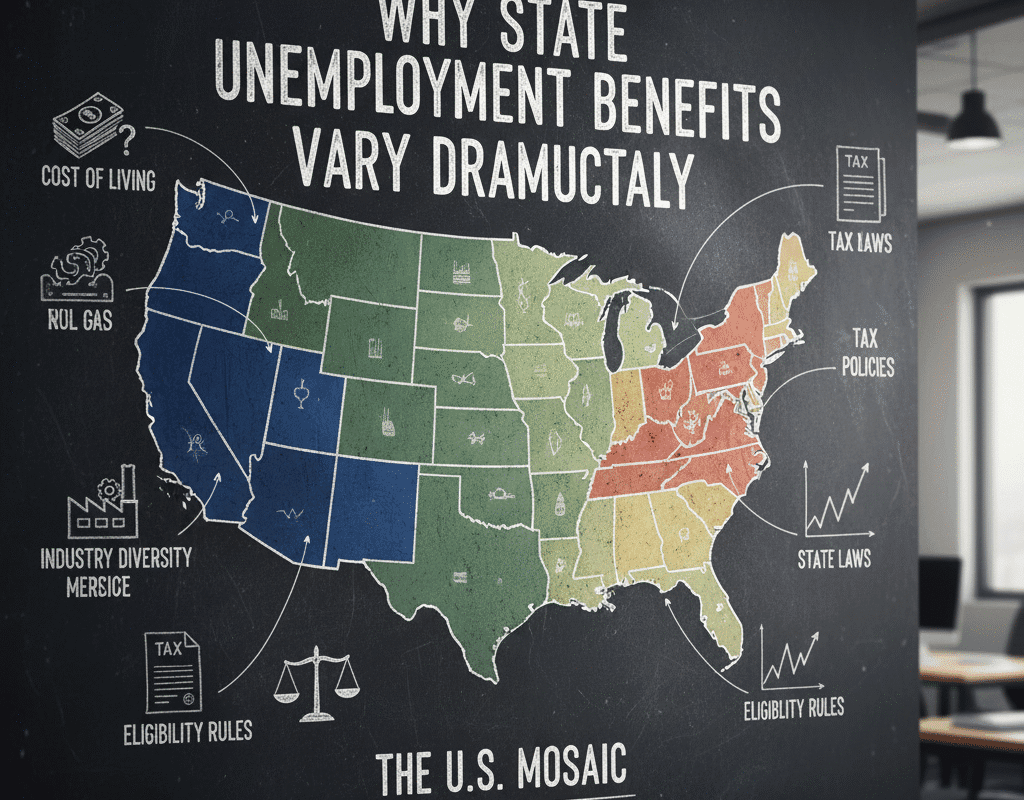
Why State Unemployment Benefits Differ So Widely?
Why State Unemployment Benefits Differ So Widely?
For good reason, the US unemployment compensation system is frequently referred to as a “patchwork system.” If an employee in one state loses their job, they may be eligible for twice as much weekly aid as someone in a nearby state with the same employment history. For millions of Americans, these disparities can be startling, inconsistent, and perplexing.
The main elements of unemployment insurance (UI), such as the amount of money you receive, how long you receive it, and who qualifies, are under state jurisdiction, but the federal government establishes some basic regulations. The nation’s profound economic, political, and geographical divisions are reflected in the unemployment system that has been shaped by this fragmented structure.
HSBC Cashback Credit Card 2025 – Benefits, Rewards & How to Apply?

The Origins of Unemployment Insurance: Why States Are in Charge
To understand today’s uneven UI system, we must go back to the 1930s, when unemployment insurance was created during the Great Depression. President Franklin D. Roosevelt pushed for a national program, but constitutional concerns and political resistance forced a compromise: states would administer their own unemployment systems, while the federal government would incentivize participation through a payroll tax structure.
This early decision—shaped by the political climate of the 1930s—laid the foundation for the disparities we see today. The federal government set guidelines, but states were given wide flexibility to:
- Define eligibility criteria
- Decide benefit formulas
- Set weekly maximum benefit amounts
- Determine duration of benefits
Duration Differences: Why Some Workers Get 26 Weeks and Others Only 12
The duration of unemployment benefits is another area where states diverge sharply.
Traditionally, most states offered up to 26 weeks of UI. But over the past decade, several states—particularly in the South—have cut duration to 12–20 weeks. Their argument: shorter benefits motivate faster job seeking and reduce employer tax burdens.
Other states maintain the traditional 26 weeks, with some extending benefits during economic downturns.
This means two workers who lose their jobs during the same economic crisis may get dramatically different levels of support depending on where they live.
Employer Tax Structures Shape Benefit Levels
Unemployment insurance is funded by employer taxes, and states design these tax systems differently. States where businesses pay higher UI taxes generally fund more robust benefit programs. Conversely, states with lower employer taxes often limit benefit generosity to keep costs down.
During recessions, states with underfunded systems sometimes face trust fund insolvency, forcing emergency decisions such as:
- Borrowing federal money
- Raising employer taxes
- Cutting benefits
These financial pressures can influence long-term benefit strategies.
Qualifications Add Another Layer of Variation
Beyond benefit amounts and duration, eligibility rules vary widely, affecting who can get help at all.
Some states have stricter requirements regarding:
- Past earnings
- The reason for job separation
- Work search requirements
- Availability criteria
This means a worker laid off for similar reasons might qualify in one state but be denied in another.
The pandemic put the system to the test and revealed its flaws.
Every weakness in the American jobless system was exacerbated by the COVID-19 pandemic. Federal emergency programs temporarily equalized benefits nationwide, but once those expired, states reverted to their widely varying policies.
Some states voluntarily ended federal benefits early, arguing that high payments discouraged workers from returning to jobs. Others maintained extended support until federal programs expired.
The result was a deeply fragmented recovery, with workers in certain states facing higher financial instability than others.
In conclusion: Why State Unemployment Benefits Differ So Widely?
Unemployment benefits differ dramatically across U.S. states due to a complex mix of historical decisions, political ideologies, economic structures, and cost-of-living variations. The system reflects deeper philosophical disagreements about the role of government, personal accountability, and striking a balance between corporate interests and worker protections in addition to policy decisions.
For millions of Americans navigating job loss, these disparities can determine the difference between financial stability and crisis. Understanding the reasons behind them is essential for shaping a more equitable future.
How U.S. Farm Subsidies Shape Food Prices, Market Dynamics, and Consumer Costs
How U.S. Farm Subsidies Shape Food Prices, Market Dynamics, and Consumer Costs