 A K
A K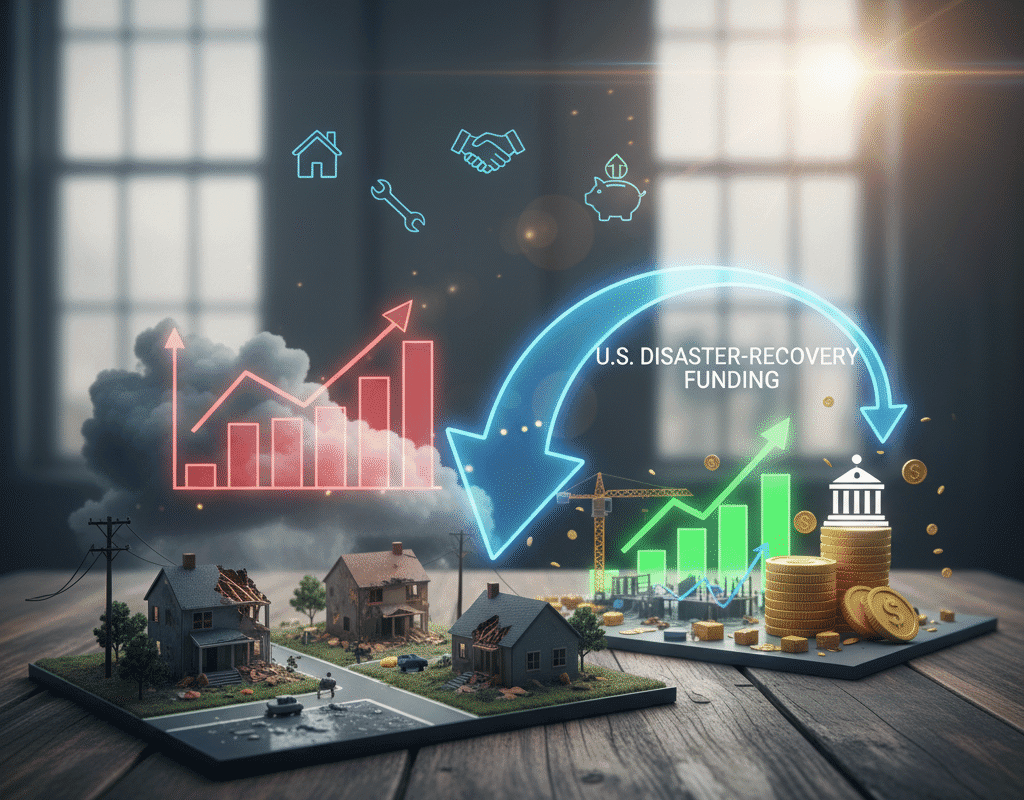
The Economics of U.S. Disaster-Recovery Funding:
The Economics of U.S. Disaster-Recovery Funding:
Natural disasters in the United States are no longer seasonal events that arrive predictably and fade without long-term economic consequences. They have become year-round financial shocks, punching multi-billion-dollar holes into federal, state, and local budgets. Hurricanes, wildfires, floods, derechos, winter storms, and droughts now occur with such frequency and intensity that the U.S. disaster-recovery funding system—once designed for rare, isolated events—is facing unprecedented strain.
Over the last decade, the federal government has quietly shifted into an economic posture akin to continual crisis management. As climate-related disasters escalate, the nation’s financial commitments to recovery have surged, sparking difficult debates about sustainability, equity, and the future of federal relief.
HSBC Cashback Credit Card 2025 – Benefits, Rewards & How to Apply?

A Generation of Catastrophes That Break Records
The Federal Emergency Management Agency (FEMA) managed a reasonable number of significant disasters for many years. These days, FEMA responds to major disasters so regularly that it is often overburdened and frequently needs additional funding from Congress.
In contrast to 5–7 billion-dollar disasters per year in the 1990s, the United States now experiences 20 or more on average per year. These occasions consist of:
- Hurricanes that cause devastation along the Atlantic and Gulf coasts
- Huge wildfires in the west are damaging infrastructure and homes.
- Unprecedented flooding across the Midwest
- Tornado outbreaks in regions not historically known for them
The Federal Government as the Default Payer of Last Resort
Historically, disaster funding in the U.S. followed a shared responsibility model among federal, state, local, and private sectors. Over time, however, the financial burden shifted dramatically toward the federal government.
Why the Shift Happened
- Disasters are more costly than insurance systems can handle
Private insurance payouts often fall short of covering catastrophic losses. Many homeowners lack adequate coverage, and insurers are retreating from high-risk regions.
- States face tighter budgets and slower recovery
States have balanced-budget requirements. After a major disaster, they cannot absorb the cost without cutting essential services.
- Federal aid is politically easier to mobilize
Congress is pressured to act quickly following headline-making destruction.
The Funding Crisis at FEMA: A System Designed for Disasters of the Past
An age of year-round disasters was never intended for FEMA’s primary funding mechanism. The agency often enters a state of “immediate needs funding,” limiting long-term recovery grants and delaying key programs.
This starts a cycle:
- FEMA runs low on money
- Congress rushes supplemental funding
- Recovery efforts slow while waiting for approval
- Delays increase economic losses and reconstruction costs
Economists warn that the existing patchwork approach increases inefficiencies and ultimately forces taxpayers to pay more.
State and Local Governments Face Mounting Pressure
While the federal government covers a large portion of disaster costs, state and local governments still shoulder significant burdens.
Key Challenges They Face
- Declining tax revenue after businesses close
- High infrastructure repair costs
- Bond rating pressures when disasters strain budgets
- Staffing shortages to manage recovery programs
- Difficulty meeting federal cost-share requirements
Are Americans Becoming Over-Reliant on Federal Aid?
Some policy experts argue that federal disaster spending—though essential—may unintentionally encourage risky development.
This concept, known as moral hazard, suggests:
- If people believe the government will rebuild after disasters, they have less incentive to avoid high-risk areas.
- Developers may build homes where insurance is insufficient.
- States may underinvest in mitigation, expecting federal support.
The Mitigation Paradox: Spending More Now Saves Much More Later
Repeated studies show that every $1 invested in mitigation saves $4–$7 in future disaster costs.
Examples of mitigation include:
- Strengthening building codes
- Elevating homes in flood zones
- Creating defensible space around properties in wildfire areas
- Upgrading drainage systems and levees
- Undergrounding power lines
- Restoring wetlands and natural barriers
America’s Economy Is at a Crossroads
Funding for disaster recovery is no longer a side project for the government. It is now a major pillar of the national economy. The financial implications affect:
- Taxpayers
- Homeowners
- Insurance markets
- Real estate prices
- Infrastructure systems
- Local and state budgets
- Federal fiscal policy
If current trends continue, disaster spending may emerge as one of the largest recurring federal expenditures of the 21st century—surpassing traditional infrastructure categories and reshaping national priorities.
How the Gig Economy Impacts Payroll Taxes in the United States: A 2025 Analysis
How the Gig Economy Impacts Payroll Taxes in the United States: A 2025 Analysis