 A K
A K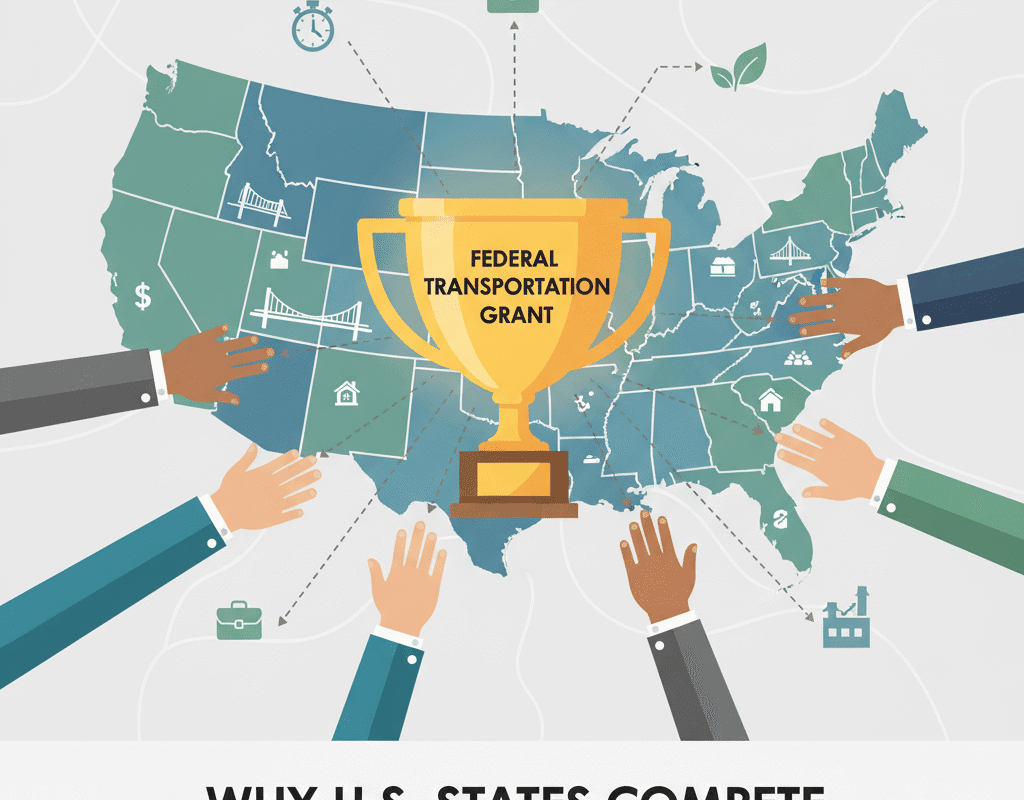
Why U.S. States Fiercely Compete for Federal Transportation?
Why U.S. States Fiercely Compete for Federal Transportation?
The race for federal transportation grants has become one of the most intense competitions in the United States’ policy landscape. What used to be a routine funding process has transformed into an aggressive, strategically coordinated, and politically charged contest among states.
As the federal government continues pumping historic levels of funding into infrastructure—especially after the Infrastructure Investment and Jobs Act (IIJA) and subsequent supplemental programs—states recognize that these grants can dramatically shape regional economies for decades.
HSBC Cashback Credit Card 2025 – Benefits, Rewards & How to Apply?

The Surge in Federal Transportation Funding
For decades, federal transportation spending followed predictable formulas, mainly through the Federal Highway Administration and Federal Transit Administration. States received funds based on population, highway miles, and other long-standing criteria.
But the recent shift toward competitive grants has changed everything.
Major Competitive Federal Programs Fueling Competition
- RAISE grants (Rebuilding American Infrastructure with Sustainability and Equity)
- INFRA grants (Infrastructure for Rebuilding America)
- MEGA grants (for major national infrastructure projects)
- Bridge Investment Program (BIP)
- Reconnecting Communities Program
Rural America’s Fight for Funding Intensifies the Competition
Rural communities, which often lack large tax bases, rely even more heavily on federal grants. Policymakers across both parties emphasize the need to invest in rural roads, bridges, ports, and rail.
However, rural applications historically compete against major urban projects with high ridership or freight volumes.
This discrepancy has intensified the competition as states attempt to:
- Showcase rural economic impact
- Highlight safety improvements
- Demonstrate national freight significance
- Strengthen political arguments for equal access
States Are Building Dedicated Grant Offices
To gain an edge, states have begun forming specialized teams to manage federal grant applications.
Common Strategies Include:
- Dedicated infrastructure grant offices
- Hiring professional grant writers
- Using engineering firms to prepare technical documentation
- Partnering with universities and transit agencies
- Employing data analytics to enhance applications
- Lobbying in Washington for better alignment with federal priorities
Some states even create multiagency task forces to coordinate proposals that cross jurisdictional boundaries.
This professionalization further increases competition, as states with the best resources can prepare more compelling submissions.
Local Communities Affected
Communities are affected when a state receives a sizable federal transportation grant:
- New positions in operations and construction
- More easily accessible modes of transportation
- Safer roads and intersections
- Reduced travel times
- Stronger supply chains
- Better connections between rural and urban areas
- Increased property values
- Economic development near new or upgraded infrastructure
These community benefits are among the strongest reasons why states pursue grants so aggressively.
The Future of Transportation Grant Competition
Looking beyond 2025, several trends are likely to shape future competition:
More climate-focused grants
Resilience, emissions reduction, and environmental justice will remain major priorities.
Expanding freight and supply chain infrastructure
Global trade pressures will demand stronger ports, rail, and logistics centers.
Growth in electric and autonomous vehicle infrastructure
States will compete for grants supporting future mobility innovations.
Increasing emphasis on safety
Programs like SS4A will play a central role in reducing traffic fatalities.
Rising demand for rural and tribal project funding
Federal agencies will continue allocating more funds to underserved regions.
Competition will remain intense as long as states depend on federal dollars to meet modern infrastructure needs.
In conclusion: Why U.S. States Fiercely Compete for Federal Transportation?
The fierce competition among U.S. states for federal transportation grants reflects a transformative period in American infrastructure policy. With massive economic gains at stake, evolving national priorities, and heightened political visibility, states are deploying unprecedented resources to secure federal support. This competition is reshaping transportation planning, accelerating modernization, and revealing both the strengths and challenges of a competitive grant-based system.
How IPOs Work on Wall Street: Inside the Process, Players, Risks, and Market Impact
How IPOs Work on Wall Street: Inside the Process, Players, Risks, and Market Impact
1 Comment