 A K
A K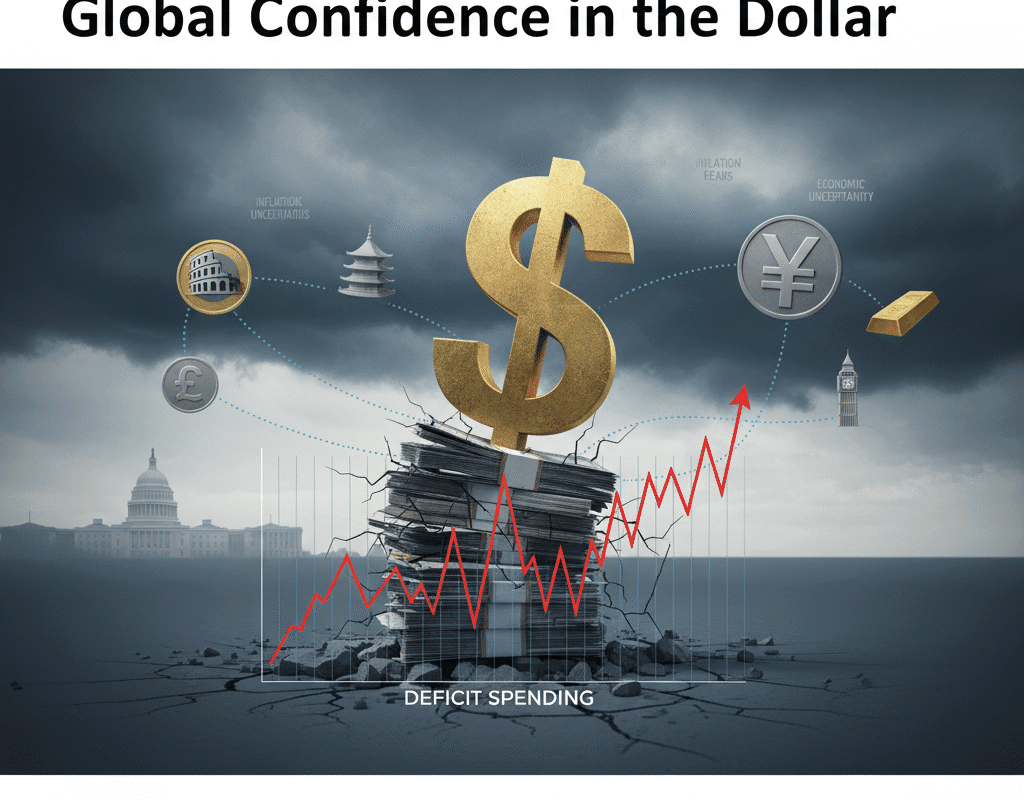
How U.S. Deficit Spending Shapes Global Confidence?
How U.S. Deficit Spending Shapes Global Confidence?
The strength of the U.S. dollar has long served as a cornerstone of the global financial system. For decades, countries around the world have relied on the dollar for trade, investment, foreign reserves, and financial stability. Yet as U.S. deficit spending accelerates, concerns are mounting about whether this trend could weaken international confidence in the dollar.
With the U.S. national debt surpassing historic highs and fiscal policy becoming a subject of intense global scrutiny, economists, investors, and policymakers are increasingly questioning how long the dollar can maintain its dominant position.
Deficit spending, while not a new feature of American economic policy, has reached levels that challenge traditional assumptions about fiscal responsibility.
HSBC Cashback Credit Card 2025 – Benefits, Rewards & How to Apply?

Understanding U.S. Deficit Spending
The U.S. runs a deficit when government spending exceeds revenue within a fiscal year. Persistent deficits contribute to the national debt—the total amount the government owes. While running deficits is not inherently problematic, especially during economic downturns, the scale and speed of debt accumulation have become increasingly alarming.
Key drivers of current deficit growth include:
- Rising interest payments on existing debt
- Expanding entitlement programs such as Social Security and Medicare
- Increased defense spending
- Emergency measures during economic or geopolitical crises
- Slower revenue growth relative to expenditures
Why the Global Role of the Dollar Is Important
The United States enjoys exceptional financial advantages due to the dollar’s supremacy. It enables America to:
- Take out a loan at a reduced interest rate
- Run persistent trade deficits without destabilizing the currency
- Impact international financial organizations
- Impose effective economic sanctions
- Maintain leadership in international capital markets
Approximately 60% of global foreign exchange reserves are held in dollars, while roughly half of international trade is conducted using the U.S. currency. Thus, global confidence in the dollar is not simply a matter of national pride—it is a fundamental pillar of the modern economic order.
The Federal Reserve’s Function
Global trust in the dollar is largely shaped by the Federal Reserve. The Fed must balance conflicting economic forces when deficits increase:
- Combat inflation caused by fiscal expansion
- Prevent recession by avoiding over-tightening
- Protect financial stability as government borrowing increases
- Maintain global trust in the dollar-based monetary system
Monetary policy decisions also influence exchange rates. A strong dollar may reflect confidence in the Fed’s ability to manage the economy, but an excessively strong dollar can hurt U.S. exporters and emerging markets that rely on dollar-denominated debt.
Benefits of Responsible Deficit Spending
It is important to note that deficit spending is not inherently negative. When managed effectively, it can:
- Support economic growth during recessions
- Fund critical infrastructure projects
- Strengthen national security
- Foster innovation in technology and healthcare
The key question lies not in whether the U.S. runs deficits, but in whether those deficits contribute to long-term economic potential or simply accumulate without strategic benefit.
In conclusion: How U.S. Deficit Spending Shapes Global Confidence?
U.S. deficit spending plays a pivotal role in shaping global confidence in the dollar. While the dollar remains the world’s dominant currency, rising deficits introduce uncertainties that foreign governments, investors, and markets cannot ignore. Confidence in the dollar depends not only on current economic conditions but also on long-term expectations about America’s fiscal trajectory and political stability.
For now, no realistic alternative matches the dollar’s strength. But the long-term consequences of persistent and expanding deficits could gradually influence global sentiment, diversify reserve holdings, and alter the financial landscape.
The future of the dollar ultimately hinges on whether the U.S. can balance its short-term fiscal needs with long-term sustainability. The world is watching—and so far, confidence remains strong, but increasingly cautious.
Why Delaware Dominates U.S. Business Incorporations: A Deep Look Into America’s Corporate Capital
Why Delaware Dominates U.S. Business Incorporations: A Deep Look Into America’s Corporate Capital