 A K
A K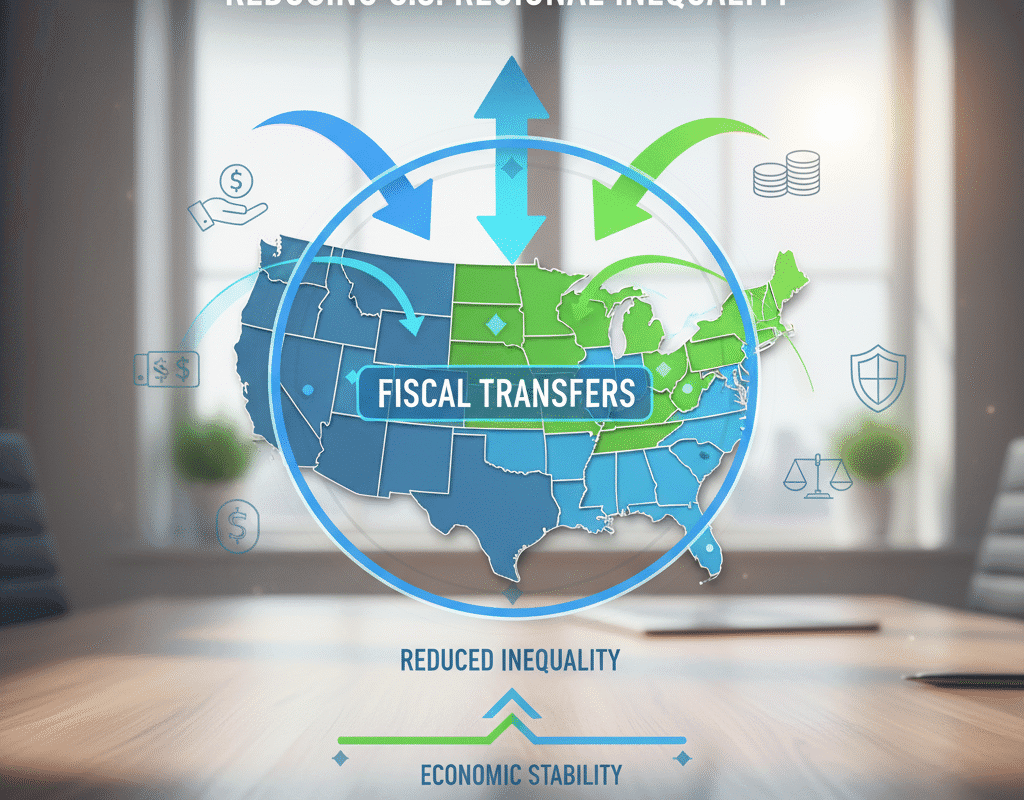
The Role of Fiscal Transfers in Reducing U.S.:
The Role of Fiscal Transfers in Reducing U.S.:
Regional inequality in the United States has been a longstanding economic and social issue. While some regions, particularly urban hubs like New York, San Francisco, and Boston, enjoy robust economic growth, others, including parts of the Midwest and rural South, continue to lag behind.
This uneven development creates disparities in income, employment opportunities, healthcare access, and education quality. In addressing this, fiscal transfers—the redistribution of government funds from wealthier to less affluent regions—play a pivotal role. This article explores the mechanisms, benefits, and challenges of fiscal transfers in reducing regional inequality in the U.S.
HSBC Cashback Credit Card 2025 – Benefits, Rewards & How to Apply?

Comprehending Fiscal Transfers
The distribution of financial resources from the federal government to state and local governments, frequently with the goal of attaining socioeconomic balance, is referred to as fiscal transfers. These transfers can occur in a number of ways:
- Grants – Funds provided to states for specific purposes, such as infrastructure, education, or healthcare.
- Revenue Sharing – Redistribution of collected federal taxes to lower-income regions to support public services.
- Entitlement Programs – Federal programs like Medicaid and unemployment benefits that directly benefit residents in economically weaker regions.
The underlying goal of these transfers is to ensure that less prosperous regions can maintain a minimum standard of public services and support economic development initiatives.
The Link Between Fiscal Transfers and Regional Inequality
Regional inequality emerges when wealth and opportunities are unevenly distributed. Factors contributing to this include industrial decline, urban-rural divides, population migration, and historical disparities in investment. Fiscal transfers help mitigate these disparities by:
- Income Redistribution: By transferring resources from wealthier regions to poorer ones, fiscal transfers reduce income gaps and enhance purchasing power in underdeveloped areas.
- Public Services Improvement: Transfers fund healthcare, education, and infrastructure projects, directly enhancing quality of life in economically lagging regions.
- Stimulating Local Economies: Federal funding can attract private investment and encourage economic activity in regions that would otherwise remain stagnant.
Economic and Social Impacts
Fiscal transfers have wide-ranging effects on regional economies:
- Economic Stabilization: Transfers act as automatic stabilizers, boosting consumption and employment in less affluent regions during economic downturns.
- Reduced Poverty and Inequality: Redistribution of resources directly lowers poverty rates and income inequality across states.
- Enhanced Human Capital: Investments in education and healthcare improve workforce skills and productivity, fostering long-term economic growth.
- Social Cohesion: By reducing regional disparities, fiscal transfers promote national unity and reduce socio-political tensions arising from economic inequality.
Obstacles and Reactions
Fiscal transfers have a number of drawbacks despite their advantages:
- Dependency Risk: Over-reliance on federal funds may reduce incentives for states to pursue efficient tax policies or attract private investment.
- Inefficiency: Misallocation of funds, bureaucratic delays, or lack of proper oversight can diminish the effectiveness of transfers.
- Political Disputes: Distribution of funds is often politically contentious, with debates over “fair shares” leading to uneven allocation.
- Limited Impact on Structural Issues: Fiscal transfers address symptoms of inequality but may not resolve deeper structural challenges like industrial decline or geographic disadvantages.
Policy Recommendations for Effective Fiscal Transfers
- Data-Driven Allocation: Use objective criteria such as poverty rates, unemployment levels, and infrastructure deficits to allocate funds more effectively.
- Encourage Local Investment: Combine federal transfers with incentives for private investment and local economic development.
- Transparency and Accountability: Ensure rigorous monitoring and reporting mechanisms to reduce inefficiency and corruption.
- Long-Term Planning: Focus on sustainable development projects that build human capital and infrastructure rather than temporary relief measures.
- Flexibility in Use: Allow states to tailor federal funds to local needs while maintaining oversight to ensure objectives are met.
The Future of Fiscal Transfers in the U.S.
As the U.S. continues to face economic challenges, including widening urban-rural divides and post-pandemic recovery, fiscal transfers will remain a vital tool in promoting regional equality. Emerging policy discussions emphasize:
- Leveraging technology for efficient fund distribution
- Coordinating federal and state efforts for holistic regional development
- Addressing climate change impacts through targeted fiscal support
- Focusing on inclusive growth that benefits marginalized communities
Ultimately, fiscal transfers are not a panacea but a crucial mechanism to ensure that all regions of the United States have the opportunity to thrive.
Conclusion: The Role of Fiscal Transfers in Reducing U.S.
Fiscal transfers play an indispensable role in reducing U.S. regional inequality. By redistributing resources, improving public services, and stimulating economic activity in lagging areas, these transfers contribute to a more balanced, equitable, and sustainable national economy.
However, maximizing their impact requires careful policy design, accountability, and a focus on long-term structural development. As regional disparities continue to challenge economic stability and social cohesion, fiscal transfers remain a key instrument in the pursuit of equitable growth across the United States.