 A K
A K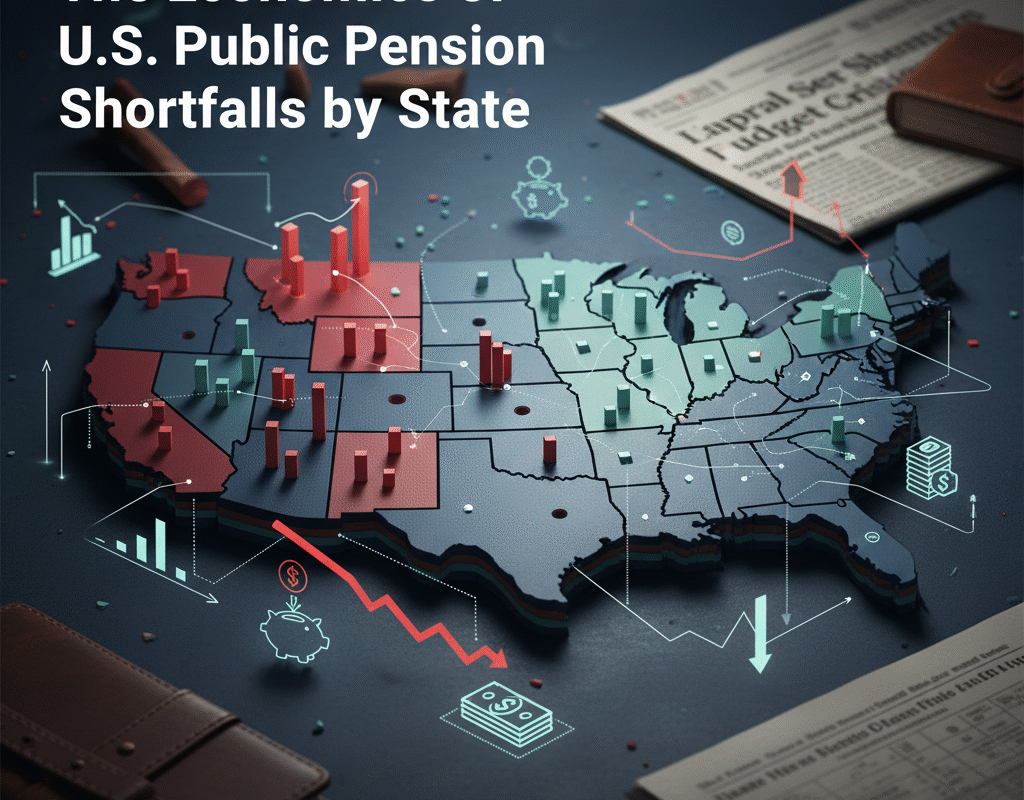
The Economics of U.S. Public Pension Shortfalls:
The Economics of U.S. Public Pension Shortfalls:
Public pensions in the United States have long been a cornerstone of financial security for retired government employees, yet today they face unprecedented funding challenges. Across the 50 states, pension shortfalls threaten both the retirement security of millions of Americans and the fiscal stability of state governments.
These shortfalls, representing the gap between promised benefits and actual assets, have grown into multi-billion-dollar crises in certain states, sparking debates on economic policy, fiscal responsibility, and taxpayer accountability.
The economics of U.S. public pension shortfalls is a complex interplay of demographic trends, investment performance, and political decision-making. While some states have managed their retirement systems prudently, others face severe underfunding that risks higher taxes, reduced public services, or scaled-back benefits.
HSBC Cashback Credit Card 2025 – Benefits, Rewards & How to Apply?

State-by-State Analysis of Pension Shortfalls
While pension shortfalls exist nationwide, the severity varies significantly by state. According to recent data from organizations like the Pew Charitable Trusts and the Center for Retirement Research:
- Severely Underfunded States: Illinois, Kentucky, and New Jersey consistently rank among the worst-funded pension systems. Illinois, for example, faces an unfunded liability exceeding $140 billion, making it a cautionary tale for fiscal mismanagement.
- Moderately Funded States: States like California and New York have relatively large pension systems but have made consistent contributions to mitigate shortfalls, leaving funding levels around 70–80%.
- Better Funded States: Wisconsin and South Dakota are examples of states with healthier pension systems, often exceeding 90% funding due to conservative investment strategies and strict contribution rules.
Factors Driving State Disparities
Several factors explain why some states face extreme pension shortfalls while others remain solvent:
- Fiscal Policy Choices: States with a history of underfunding or deferring contributions experience the largest gaps. Political pressures often lead to “kicking the can down the road” rather than addressing long-term pension obligations.
- Economic Base: States with smaller tax bases or volatile revenue streams struggle to meet pension obligations without imposing heavy burdens on taxpayers.
- Management Practices: States that adopt sound actuarial assumptions, diversified investment portfolios, and regular funding policies maintain healthier pension systems.
- Labor Negotiations: Strong public-sector unions advocating for generous retirement benefits can contribute to larger obligations, especially if not matched by adequate funding.
Case Studies: Lessons from Specific States
Illinois:
Illinois exemplifies a state with one of the most dire pension crises in the U.S. Years of underfunding, unrealistic investment assumptions, and political gridlock have created a system only 40–45% funded. The state now spends billions annually on interest and contributions, crowding out other essential services.
Wisconsin:
Wisconsin offers a model of fiscal discipline. The state requires consistent contributions based on actuarial recommendations and maintains a diversified investment portfolio. Its pension system is more than 90% funded, demonstrating the benefits of disciplined fiscal management and transparency.
New Jersey:
New Jersey faces a combination of large pension obligations and slow economic growth. While lawmakers have enacted reforms, legacy costs and rising benefit obligations continue to strain state finances, highlighting the challenge of reversing decades of underfunding.
Strategies for Addressing Pension Shortfalls
States employ several strategies to address pension funding gaps:
- Pension Reform: Adjusting benefits for new hires, increasing employee contributions, or modifying cost-of-living adjustments can reduce long-term liabilities.
- Enhanced Funding Policies: Committing to actuarially recommended contributions and avoiding deferrals helps close funding gaps gradually.
- Investment Diversification: Reducing reliance on risky assets and adopting long-term investment strategies can improve funding stability.
- Debt Issuance: Some states issue pension obligation bonds to address immediate shortfalls, though this approach carries risks if investment returns do not meet expectations.
- Public-Private Partnerships: Some states explore hybrid pension plans combining defined benefit and defined contribution models to reduce risk exposure.
In conclusion: The Economics of U.S. Public Pension Shortfalls
U.S. public pension shortfalls are more than an accounting issue—they are an economic challenge with significant consequences for state budgets, taxpayers, and retirees. While the severity varies by state, the underlying causes—underfunding, demographic changes, and investment volatility—are common across the nation.
Addressing these shortfalls requires a combination of policy reform, disciplined funding, and strategic investment. By learning from successful states and implementing evidence-based strategies, the U.S. can work toward sustainable public pension systems that honor commitments to retirees without jeopardizing economic stability.
Public pensions are a reflection of a state’s fiscal health. Managing them responsibly is not only a financial imperative but also a social and economic one, ensuring that retirement security and public services remain viable for future generations.
The Role of SNAP: Transforming Food Security and Supporting Millions of Americans
The Role of SNAP: Transforming Food Security and Supporting Millions of Americans