 A K
A K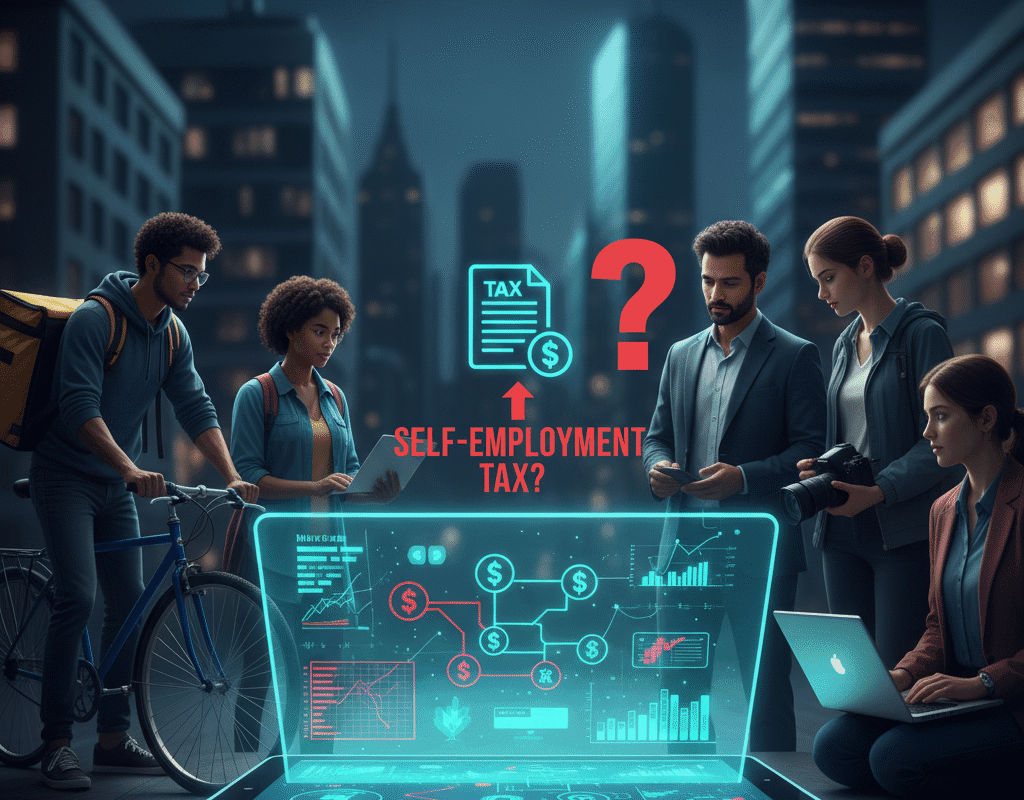
How the Gig Economy Impacts Payroll Taxes?
How the Gig Economy Impacts Payroll Taxes?
Over the past decade, the United States has experienced a dramatic shift in how people work. Traditional full-time employment is no longer the only or even the dominant path for millions of Americans. Instead, the gig economy—comprised of independent contractors, freelancers, and platform-based workers—has become a major force in shaping the nation’s labor landscape.
From rideshare drivers to freelance designers, delivery couriers, coders, home repair specialists, tutors, and virtual assistants, the gig workforce now spans nearly every industry. Economic uncertainty, demand for flexible work, and the expansion of digital platforms have accelerated this trend. By 2025, analysts estimate that well over one-third of the U.S. workforce is participating in gig work in some capacity.
HSBC Cashback Credit Card 2025 – Benefits, Rewards & How to Apply?

The Explosion of Gig Work and Its Tax Implications
The shift toward gig work has had several major impacts on the payroll tax system:
A Significant Increase in Self-Employment Tax Filings
Every year, millions of Americans who previously had taxes withheld now must report independent contractor income and calculate self-employment taxes. This includes:
- Ride-hail drivers
- Food delivery workers
- Freelance creatives
- Contract IT workers
- Health and wellness contractors
- Home service providers
- Online sellers and marketplace contractors
Many of these individuals also juggle multiple income sources, making tax filing even more complicated.
A Growing Tax Gap Caused by Underreporting
One of the IRS’s biggest challenges is enforcing tax compliance among gig workers. Unlike traditional payroll systems, gig platforms do not automatically withhold taxes, and reporting often depends on:
- Whether the platform issues a Form 1099-K or 1099-NEC
- Whether earnings exceed reporting thresholds
- Whether workers voluntarily report all earned income
A large portion of gig workers underreport or misunderstand their tax obligations, contributing to the federal tax gap.
The Reduction in Payroll Contributions Funded by Employers
When employees become contractors instead of employees, companies are no longer responsible for:
- Social Security
- Medicare
- Unemployment insurance
- Workers’ compensation
This shift has long-term implications for national social program funding, potentially increasing strain on federal resources as fewer workers pay in through traditional payroll channels.
Employee vs. Contractor Classification: The Root of Payroll Tax Issues
One of the most debated topics in labor policy is worker classification. The classification determines who pays payroll taxes and who bears regulatory responsibility.
Why Misclassification Matters
If a company classifies a worker as an independent contractor instead of an employee:
- It avoids payroll taxes
- It avoids benefits and labor protections
- It shifts tax burdens to the worker
- It decreases federal revenue
As gig platforms scale rapidly, questions about whether these workers should be reclassified as employees have taken center stage.
IRS Scrutiny: Gig Workers and Payroll Tax Enforcement
The IRS has responded to gig economy growth with increased enforcement, particularly around:
- Underreported income
- Missing quarterly estimated tax payments
- Platforms failing to issue required tax forms
- Workers misclassifying themselves for tax advantages
The agency has also expanded digital monitoring tools to track platform-based income. Many gig workers are now surprised to learn that their earnings are more traceable than they assumed.
Gig Platforms and the Push for Greater Payroll Responsibilities
Another key development is the debated expectation that gig platforms—such as delivery, rideshare, and freelance marketplaces—should take on more responsibility for taxes.
Some policymakers argue platforms should:
- Withhold a portion of workers’ earnings for taxes
- Contribute to Social Security and Medicare
- Collect unemployment insurance taxes
- Provide clearer tax documentation
Platform companies push back, claiming this would undermine flexibility and raise operating costs.
Effect on Medicare and Social Security Funding
Employers no longer contribute to the following when employees are categorized as independent contractors:
- Trust Fund for Social Security
- Trust Fund for Medicare
This reduces the amount of revenue flowing into these vital national programs. If the rate of gig work continues to grow faster than traditional employment, the funding gap could widen.
Economic Outlook: Will the Gig Economy Reshape the U.S. Tax System?
Most analysts agree that the gig economy isn’t a temporary trend—it’s a permanent restructuring of how Americans work. As a result, the nation’s tax system must adapt.
Trends suggest:
- More workers will rely on multiple income sources.
- Flexible, on-demand labor will continue expanding across industries.
- Gig workers will become a central part of the national workforce.
- Payroll tax rules designed decades ago will likely be overhauled.
- What remains unclear is which policy path lawmakers will take.
Conclusion: How the Gig Economy Impacts Payroll Taxes?
The rise of the gig economy has fundamentally transformed payroll taxes in the United States. It has created new challenges for workers, employers, and government agencies alike, raising critical questions about tax fairness, revenue stability, and the future of work.
As gig work becomes a cornerstone of the American labor market, policymakers are being forced to rethink payroll tax rules that were built for a very different era. Whether through new worker classifications, mandatory withholding, digital tax integration, or federal reform, one thing is certain:
Payroll taxes will continue to evolve as the gig economy reshapes the U.S. workforce.
How Reverse Mortgages Work for Seniors in 2025: A Complete Guide to Retirement Home Equity
How Reverse Mortgages Work for Seniors in 2025: A Complete Guide to Retirement Home Equity