 A K
A K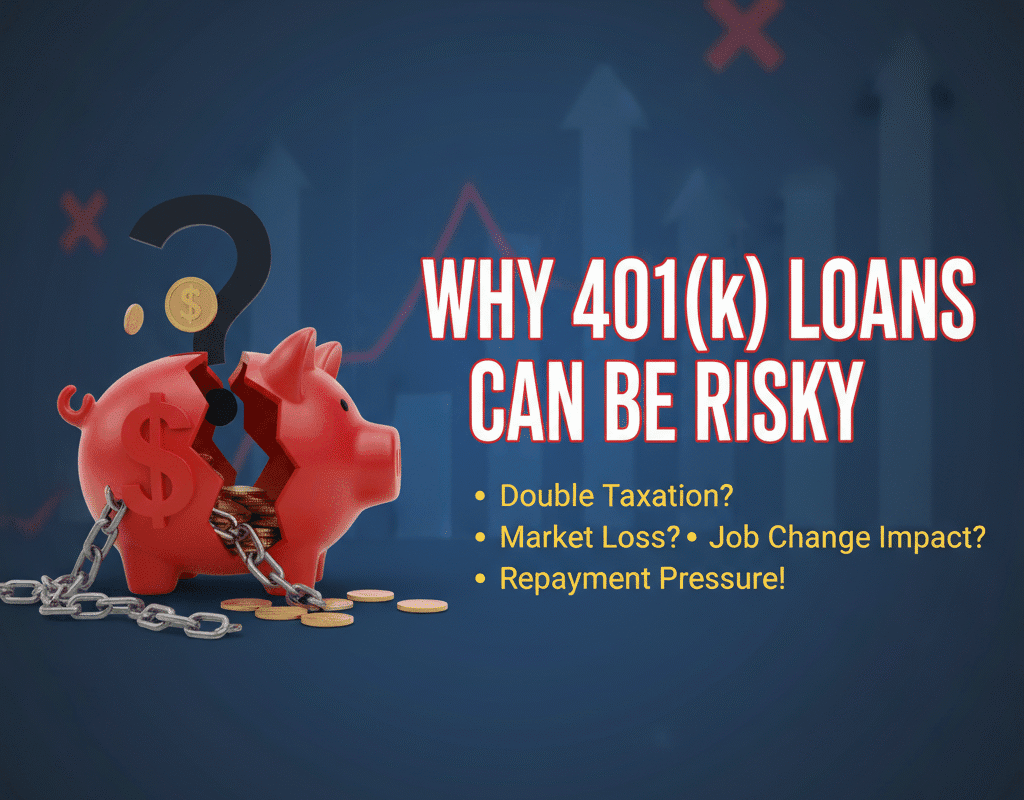
Why 401(k) Loans Can Be Risky?
Why 401(k) Loans Can Be Risky?
Borrowing money from their retirement fund may seem like a smart option for many American workers to get cash when they need it. However, there are several drawbacks to what appears to be “borrowing from yourself” when it comes to taking out a loan from a retirement plan like a 401(k).
We’ll look at why 401(k) loans can be dangerous in this post, particularly in terms of how they can jeopardize your long-term retirement objectives.
HSBC Cashback Credit Card 2025 – Benefits, Rewards & How to Apply?

What is a 401(k) Loan?
A 401(k) loan is a feature offered by some employer-sponsored retirement plans that allows a participant to borrow against their own account balance.
Generally, you can borrow up to 50% of your vested balance (or up to $50,000, whichever is less) and repay it over a specified period, often five years — though in certain cases (such as a loan for a home purchase) the repayment period may extend.
Because you are borrowing from your own retirement funds, the interest you pay goes back into the 401(k) plan. On the surface, this seems like you’re paying yourself interest rather than a bank.
Major Risks of Taking a 401(k) Loan
Lost Investment Growth and Compounding
One of the biggest hidden costs of a 401(k) loan is the opportunity cost: when you take money out of your retirement account, that money is no longer invested and earning returns for the time you have the loan outstanding.
For example, if your account might otherwise earn 7 %–8 % per year, but part of it is removed for a loan, you lose those compounded returns on that portion. Over many years, that can translate into a materially smaller retirement nest egg.
Repayment with After-Tax Dollars = Double Taxation Risk
When you repay a 401(k) loan, you are using after-tax dollars to put money back into a tax-deferred account. Later, when you withdraw funds in retirement, they will be taxed again. In effect, you are paying tax twice on the same money.
Job Change or Job Loss Can Trigger Immediate Risk
Another major risk of borrowing from your 401(k) is that your employer’s plan may require you to repay the loan in full if you leave the job (voluntarily or involuntarily). If you cannot repay, the outstanding balance may be treated as a distribution.
When It Might Make Sense to Take Out a 401(k) Loan, But Only Carefully
Not all 401(k) loans are terrible, though. In certain very specific situations, they can make sense — but only when you’ve thought through the risks and the alternatives. Key considerations include:
- You are confident you will stay in the same job until the loan is repaid (or have a plan for repayment if you leave).
- You have no better sources of funding for your immediate need.
- You understand you are sacrificing long-term growth for short-term cash.
- You continue to contribute to your retirement plan while repaying the loan, if allowed.
Effects in the Real World: How Much Could You Lose?
To make the risk more concrete: imagine you borrow $20,000 from your 401(k) and repay it over five years. Meanwhile imagine your retirement account might have earned 7 % per year if left invested.
Over 20 years, that missing $20,000 might have grown many times over. Plus you pay back interest with after-tax dollars, and maybe you miss out on employer matching or future contributions while repaying.
Even industry literature acknowledges: “When you reduce the balance of your 401(k) account, you have less money growing … and some plans have terms that prevent you from being able to make further contributions until the loan is repaid.”
Loss of Retirement Safety Net — The Emotional & Practical Cost
Your 401(k) isn’t just “money you’ll spend later”; it is your retirement safety net. When you borrow from it, you’re reducing the cushion that’s meant to support you in old age.
If you withdraw or loan too much and then something unexpected happens (market downturn, health issue, longer retirement than expected), you may find yourself short.
Industry commentary warns: “The 401(k) balance may one day represent the last possible weapon to stave off financial disaster. If you exercise the nuclear option and press the button, that money won’t be there if a true emergency strikes.”
In summary, borrowing ought to be a last resort.
If you’re thinking about taking out a loan from your 401(k), consider this:
- Do I comprehend the terms of the plan (maximum amount, repayment period, and what happens if I quit my job)?
- Even if my job changes, would I still be able to return the loan on time?
- Is it acceptable for me to forgo long-term investment growth in order to meet a pressing need?
- Could I get greater funding from other sources without jeopardizing my retirement?
- By taking this loan, am I endangering future savings or employer contributions?
- The conclusion should be that it’s probably not worth it if you respond “no” to any of those.
Safer Decision-Making Guidelines
If you’re still thinking about taking out a 401(k) loan, consider the following useful advice:
- Treat it like a real loan: When you take money out of retirement, act as though you’re borrowing money from a bank; you’ll need a strategy, schedule, and safety net.
- Continue to contribute: If your plan permits, keep making contributions to your 401(k) while you make repayments. This lessens the loss of growth.
- Establish an emergency fund: One of the main objectives is to prevent borrowing from retirement in the first place. Three to six months’ worth of living expenditures should be maintained liquid, according to industry guidance.
- Have an exit strategy: What will you do in the event that your employer changes or you lose your job? Make a rollover or payback plan.
- First, think about your options: Prior to using retirement assets, consider personal loans, credit lines, or other options.
In conclusion: Why 401(k) Loans Can Be Risky?
The ability to borrow from your 401(k) may feel like a safety valve or self-help mechanism in a financial bind. But the long-term consequences frequently outweigh the short-term benefit.
The risks of lost growth, double taxation, job-change shock, and retirement shortfall make 401(k) loans one of the more expensive ways to access cash — even when interest rates seem favorable.
For the average worker, the wiser path often is to: build an emergency fund, minimise dependence on retirement savings for short-term needs, and treat borrowing from the future as something to be avoided unless absolutely necessary.
Why Medical Debt Remains a Leading Cause of Bankruptcy in the U.S.
Why Medical Debt Remains a Leading Cause of Bankruptcy in the U.S.