 A K
A K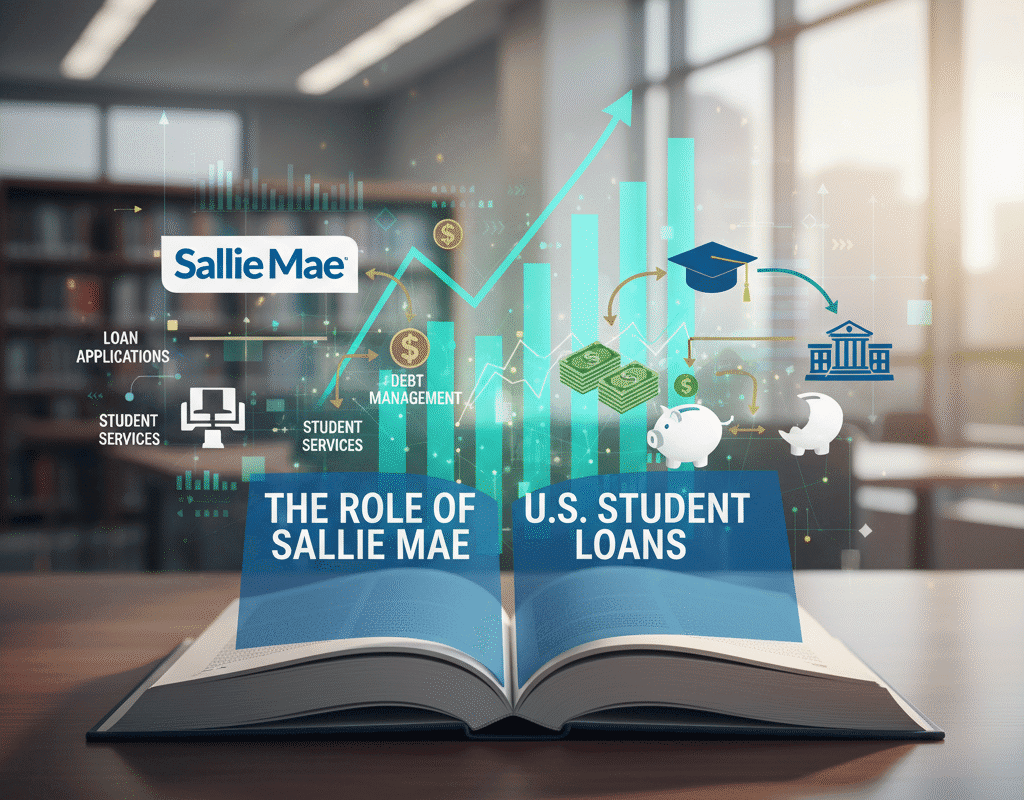
The Role of Sallie Mae in U.S. Student Loans:
The Role of Sallie Mae in U.S. Student Loans:
When American students and their families think of financing higher education, the name Sallie Mae invariably comes to mind. Once a quasi-government entity, Sallie Mae now operates largely as a private lender and bank that plays a distinct role in the U.S. student-loan ecosystem. Understanding its origins, current role, and implications for borrowers is vital in a climate where student debt has reached historic levels.
In this article for USACurrentAffair.com, we take a deep dive into Sallie Mae’s evolution, its present-day operations, how it differs from federal student-loan programs, and what students should know when considering its products or services.
HSBC Cashback Credit Card 2025 – Benefits, Rewards & How to Apply?

The History and Development of Sallie Mae
Under a government charter, the organization that would later become Sallie Mae was founded in 1972 as the Student Loan Marketing Association (SLM). Its initial function was to support the secondary market for student loans that were guaranteed by the federal government. Its nature altered over time.
The privatization process started in 1997, and by 2004, the corporation had completely transitioned to the private sector when its federal charter was revoked. On April 30, 2014 the company spun off its loan-servicing operation into a separate publicly-traded entity, Navient Corporation, leaving Sallie Mae to focus on private lending, banking and other consumer financial-products tied to higher education.
Sallie Mae’s Current Role in Student Financing
Private Student Loans & Supplementing Federal Aid
Today, Sallie Mae markets itself as “the nation’s saving, planning and paying for college company” offering private education loans, college-planning tools and banking products. Importantly, Sallie Mae emphasises that its private student loans are meant to fill the “gap” after scholarships, grants, savings and federal student aid have been exhausted.
When borrowing privately (via Sallie Mae or similar lenders), borrowers (or their cosigners) are evaluated on creditworthiness, and the interest rates and repayment terms differ markedly from federal student-loans.
Features, Loan Products, and Borrower Obligations
Sallie Mae offers private student loans with a number of advantages, such as:
- Up to 100 % of a school’s certified Cost of Attendance (COA) may be covered (less other aid) via a private loan.
- the need for a cosigner and, frequently, a credit check.
- Variability in interest rate types (fixed vs variable) and certain repayment options (though not as flexible as federal loans) .
- Various support tools: scholarship‐search, planning tools, guidance on “get ready to borrow” decisions.
In short, Sallie Mae fulfils a complementary role — not replacing federal aid, but stepping in when that aid and other sources fall short.
Federal Student Loans vs Private Loans: Where Sallie Mae Fits
It’s critical that students and families understand how private loans — such as those offered by Sallie Mae — differ from federal student-loans. According to Sallie Mae’s own materials:
- Federal loans are not credit-based (except in certain cases like PLUS Loans) whereas private loans are credit-based.
- Federal loans offer fixed interest rates, income-driven repayment plans, and more flexible borrower protections (such as deferment, forgiveness) which private lenders generally do not.
- Private loans are intended as a last-resort financial tool after federal aid, savings and free money (scholarships/grants) have been utilised.
Why Sallie Mae’s Contribution Is Important in the Current Student Debt Environment
The Market Size for Student Loans
The majority of the more than $1.7 trillion in outstanding student debt in the United States is held by the federal government. Even though it makes up a considerably smaller portion of Sallie Mae’s portfolio, private loans play a significant part in helping families and students find financial solutions once their federal aid or savings have run out.
Costs of Education and Funding Shortfalls
With tuition, fees, housing, and other associated costs rising steadily over decades, many students find themselves with “financing gaps” — amounts they must borrow to cover all expenses. Private lenders like Sallie Mae aim to fill these gaps.
Borrower Choices & Consequences
Because private loans lack the same borrower protections as federal loans, the choice to borrow from a lender like Sallie Mae carries added importance. Terms such as interest rate changes (for variable loans), limited repayment flexibility, cosigner obligations, and the faster accrual of interest mean that borrowers need to be highly informed. An article from LendEDU noted that crushingly low customer-reviews and reported difficulties with Sallie Mae’s customer service should give prospective borrowers pause.
The Bigger Picture: Why Private Lenders Like Sallie Mae Remain Part of the Puzzle
Filling Financing Gaps
As higher-education costs continue to rise, private student loans remain part of the financing ecosystem. Without them, some students might simply be unable to attend or persist through college. Sallie Mae’s presence in this space means there is some additional access.
Market Signalling & Appetite
The fact that a major financial institution like Sallie Mae continues to offer student-loan products signals that the private financing market for higher education remains viable. That has implications for the future structure of college financing.
Implications for Policy
The existence of lenders like Sallie Mae presents significant policy concerns around equity, risk-sharing, borrower rights, and the cost of higher education because private loans lack the same protections as federal student loans. The relationship between public and private funding for student loans is still a contentious one for universities, borrowers, and federal regulators.
In conclusion: The Role of Sallie Mae in U.S. Student Loans
Sallie Mae holds a significant, albeit frequently misinterpreted, place in the broad U.S. student loan market. It is a private lender that specializes in bridging financial gaps for students and their families after federal aid, scholarships, and savings have been utilized. It does not offer federal student loans. It plays an important role, particularly as tuition and educational expenses increase, but so do the dangers and obligations that borrowers who opt for private loans bear.
If you or someone you know is considering borrowing from Sallie Mae, it’s essential to be fully informed: understand how private student loans differ from federal options, evaluate the cost and load of borrowing, shop and compare alternatives, and plan the repayment strategy ahead of time.
The Impact of Federal Stimulus Packages on Inflation in the U.S. Economy
The Impact of Federal Stimulus Packages on Inflation in the U.S. Economy