 A K
A K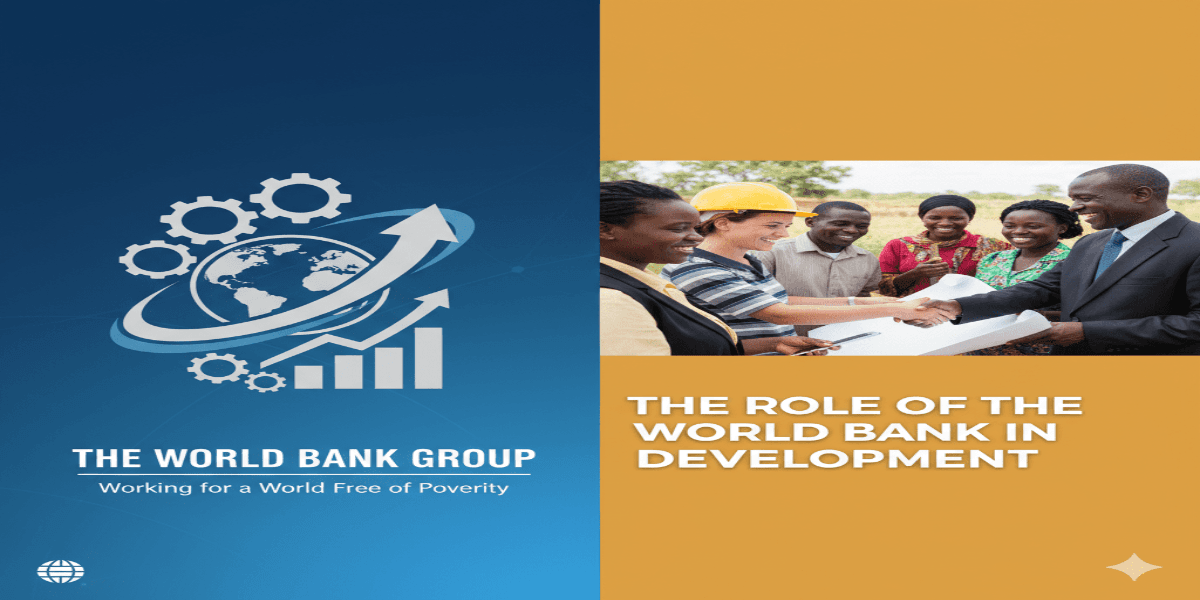
The Role of the World Bank in Global Development:
The Role of the World Bank in Global Development:
Since its founding in 1944, the World Bank has been among the most significant financial organizations in influencing the state of the world economy. The World Bank was founded at the Bretton Woods Conference with the International Monetary Fund (IMF) with the goal of aiding in post-World War II reconstruction. Later, the organization’s mandate was broadened to include promoting development, lowering poverty, and assisting in the expansion of infrastructure in developing countries.
In today’s interconnected world, the role of the World Bank in development remains as critical as ever. With more than 180 member countries, the World Bank provides financial support, policy guidance, and technical expertise to governments. Its projects influence everything from roads, schools, and hospitals to environmental sustainability and governance reforms.
HSBC Cashback Credit Card 2025 – Benefits, Rewards & How to Apply?

The World Bank’s Historical Background
In order to aid in the post-World War II reconstruction of Europe, the World Bank was established in 1944. At first, it concentrated on restoring infrastructure and stabilizing war-torn economies. Its mission has changed throughout time to focus on more general development objectives, especially in Asia, Africa, and Latin America.
The fundamental framework of the Bank consists of:
- Middle-income and creditworthy low-income nations can apply for loans from the International Bank for Reconstruction and Development (IBRD).
- The International Development Association (IDA) provides the poorest countries with grants and loans at reduced rates.
Along with other organizations like the Multilateral Investment Guarantee Agency (MIGA) and the International Finance Corporation (IFC), the IBRD and IDA together constitute the main lending arms of the World Bank Group.
The Primary Goal of the World Bank
The two main objectives of the World Bank’s mission are:
- Lowering the proportion of people living on less than $2.15 per day in order to eradicate extreme poverty.
- Increasing the income growth of the 40% of the population that lives in poverty in every nation in order to promote shared prosperity.
These objectives are in line with the Sustainable Development Goals (SDGs) of the UN, especially in the areas of economic growth, gender equality, health, education, and climate action.
Key Roles of the World Bank in Development
Funding Infrastructure Initiatives
One of the most noticeable facets of the World Bank’s operations is still infrastructure. The Bank finances projects that are essential to economic growth, such as power plants, water systems, telecommunications, and roads and highways. Building dependable transportation networks, for example, not only brings communities together but also promotes trade, lowers prices, and expands market accessibility.
Reducing Inequality and Poverty
Through concessional loans and targeted programs, the World Bank focuses heavily on poverty reduction. Its initiatives often involve improving access to healthcare, education, and social services for vulnerable populations. Programs to support food security, women’s empowerment, and rural development are central to this mission.
Endorsing Institutional Reform and Governance
Sustainable growth requires effective government. The World Bank provides technical assistance to help governments strengthen their institutions, fight corruption, and improve transparency. By fostering accountable governance, the Bank enhances the effectiveness of development spending.
Promoting Economic Growth
The World Bank encourages countries to implement sound macroeconomic policies. It advises on fiscal discipline, trade liberalization, and regulatory reforms, helping governments stabilize economies, attract investment, and encourage entrepreneurship.
Addressing Global Challenges
Beyond country-specific projects, the World Bank plays a leading role in addressing cross-border challenges like climate change, global pandemics, and migration crises. Its Climate Change Action Plan, for example, integrates environmental sustainability into development projects.
The World Bank’s Effect on Developing Nations
Health and Education
The World Bank has made billion-dollar investments in Latin American, Asian, and African educational systems. It guarantees access to high-quality education through everything from school construction to teacher training. In a similar vein, the Bank-funded health initiatives have increased immunization campaigns, maternal health care, and disease preventive strategies.
Rural Development and Agriculture
The World Bank has provided funding for rural electricity, agricultural research, and irrigation infrastructure in agrarian economies. These programs increase food security in addition to production.
Extension of Infrastructure
Infrastructure initiatives supported by the World Bank have revolutionized the energy and transportation sectors in nations like Brazil, Nigeria, and India. Improved connection and a dependable power source boost trade and industry.
Criticisms and Challenges Facing the World Bank
Despite its successes, the World Bank has faced consistent criticism:
- Conditional Lending: Many argue that the conditions attached to World Bank loans, such as privatization and austerity measures, sometimes harm vulnerable populations instead of helping them.
- Debt Burden: Developing countries can become trapped in cycles of debt due to reliance on external loans.
- Environmental Concerns: Large infrastructure projects have occasionally been criticized for causing ecological damage and displacing communities.
- Western Dominance: The leadership structure, with the United States traditionally appointing the World Bank president, has led to accusations of bias in favor of Western interests.
- Effectiveness Debate: Some critics question whether the World Bank has always delivered sustainable results, arguing that projects sometimes lack long-term impact.
The United States and the World Bank
In the World Bank, the United States is a key player. The United States has substantial control over its leadership and policies as the biggest stakeholder. Washington’s interest in influencing the course of the world economy and furthering strategic objectives including fostering democratic governance and stability in weak governments is reflected in this partnership.
However, the U.S. role has also sparked debate about whether the Bank is sufficiently inclusive of emerging economies like China, India, and Brazil, which demand greater representation in decision-making.
In Conclusion: The Role of the World Bank in Global Development
The role of the World Bank in development cannot be overstated. From financing critical infrastructure and supporting health and education to addressing global crises and promoting sustainable growth, the Bank remains a cornerstone of international development.
Yet, it also faces significant challenges—ranging from criticisms of conditional lending and governance imbalances to the urgent need to tackle climate change and digital transformation. For the World Bank to remain effective, it must adapt to the evolving demands of a rapidly changing world while staying true to its mission of reducing poverty and fostering shared prosperity.
Ultimately, the World Bank’s legacy will depend on how well it balances global priorities with the diverse needs of individual nations.
How to Manage Seasonal Cash Flow in Business: Strategies for Year-Round Stability
How to Manage Seasonal Cash Flow in Business: Strategies for Year-Round Stability