 A K
A K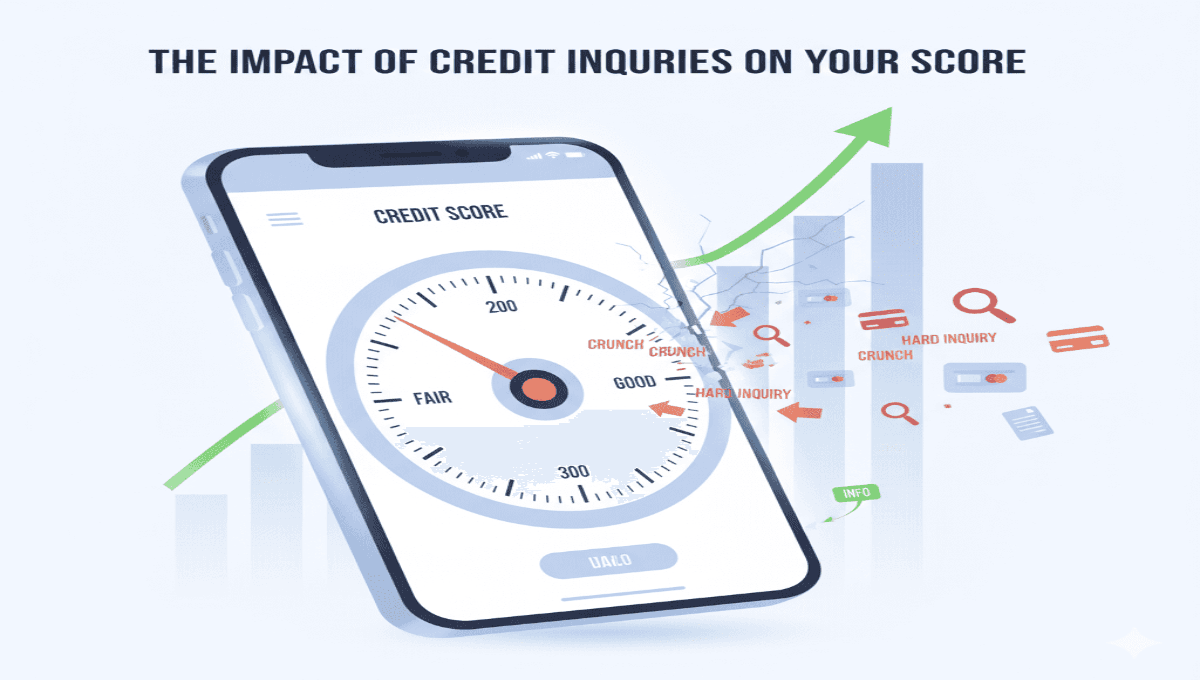
The Impact of Credit Inquiries on Your Score:
The Impact of Credit Inquiries on Your Score:
Your credit score is more than simply a number in the modern financial world; it’s a doorway to opportunity. Your credit report and score are important whether you’re applying for a mortgage, renting an apartment, purchasing a car, or even applying for some jobs. The credit inquiry is one of the most frequent elements that influences your score, yet it’s frequently misinterpreted.
However, what is the true significance of credit inquiries? Are these small blips or do they significantly reduce your score? This article examines how credit inquiries affect your score, clarifies the distinction between hard and soft inquiries, and offers practical advice for safeguarding your financial reputation.
HSBC Cashback Credit Card 2025 – Benefits, Rewards & How to Apply?

A Credit Inquiry: What Is It?
When someone looks up your credit record, it’s called a credit inquiry. This may occur when you apply for a mortgage, personal loan, credit card, or even when you ask for your own credit report.
There are two categories of credit inquiries:
Hard Pull (Hard Inquiry):
- Occurs when a financial institution or lender runs a credit check on you in order to make a loan.
- For instance, applying for a mortgage or auto loan.
- May have an impact on your credit score.
Soft Pull (Soft Inquiry):
- Occurs when a non-lending credit check is performed.
- Example: Background checks, pre-approved credit card offers, or when you check your own score.
- Does not affect your credit score.
The Impact of Credit Inquiries on Credit Score
Despite what many people think, a single query does not lower your credit score. Actually, the majority of questions only result in a brief, minor decline of 5 to 10 points. However, multiple inquiries in a short period can raise red flags to lenders, making you look risky.
Hard Inquiries and Their Impact
- Each hard inquiry can reduce your score slightly.
- The effect usually lasts 12 months, though inquiries remain on your credit report for two years.
- Multiple hard inquiries for the same type of loan (like mortgage or auto loan shopping) within a short period are often treated as one inquiry by scoring models such as FICO and VantageScore.
Soft Questions and Their Effects
- Your score is unaffected by soft pulls.
- Lenders cannot see them; only you can.
Credit Inquiries and FICO vs. VantageScore
Both major credit scoring models handle inquiries differently:
FICO Score:
- Groups multiple inquiries for mortgages, auto loans, or student loans made within a 14-45 day window as one.
- Focuses more on payment history and credit utilization.
VantageScore:
- Uses a 14-day rolling window for inquiries.
- Puts slightly more weight on recent credit behavior.
Conditions That Lead to Hard Questions
You can make better plans if you know when a harsh inquiry is likely to happen. Typical instances consist of:
- Applying for a new credit card
- Applying for a personal loan or business loan
- Applying for a mortgage or auto loan
- Renting an apartment (landlords often check credit)
- Setting up utility services (electricity, internet, etc.)
- Some employment background checks (with permission)
Why Is Credit Affected by Hard Inquiries?
Hard inquiries are interpreted by credit score models as indicators of credit-seeking behavior. Applying for several credit cards or loans at once may indicate financial difficulties. Inquiries are incorporated into scoring models to predict creditworthiness because lenders seek to steer clear of hazardous customers.
To what extent are credit inquiries important?
Inquiries have a minor effect in relation to other credit score factors:
- Past payments: 35% of the total score
- 30% of the score is used for credit utilization.
- Credit history duration: 15%
- 10% of the credit mix
- 10% of new credit (inquiries)
To put it another way, while queries do play a part, they are far less important than making on-time bill payments or maintaining low balances.
How to Minimize the Impact of Credit Inquiries
- Rate Shop Smartly: If you’re applying for a mortgage or car loan, do all applications within a short window (14–45 days).
- Avoid Unnecessary Credit Applications: Don’t apply for multiple cards just to test your luck.
- Monitor Your Credit: Check your score regularly using free tools or apps.
- Dispute Unauthorized Inquiries: If you spot inquiries you didn’t authorize, contact the credit bureau immediately.
- Time Your Applications: Space out new credit applications by at least six months when possible.
How to Get Well After Several Questions
Don’t fear if you already have a lot of hard pulls. You can raise your score again by concentrating on:
- Making timely bill payments
- Lowering credit card amounts
- Maintaining previous accounts to extend your credit history
- Using credit sensibly to demonstrate your dependability to lenders
Concluding remarks
Credit inquiries may seem intimidating, but they are just one small piece of the puzzle. A single hard pull won’t ruin your financial future. What matters most is how you manage your overall credit—paying on time, keeping balances low, and being responsible with new credit applications.
By understanding the difference between hard and soft inquiries, you can confidently navigate your financial journey. For most Americans, inquiries are nothing to fear—just a reminder to be mindful when seeking new credit.
The Role of Patience in Wealth Creation: Why Long-Term Thinking Builds Lasting Wealth
The Role of Patience in Wealth Creation: Why Long-Term Thinking Builds Lasting Wealth