 A K
A K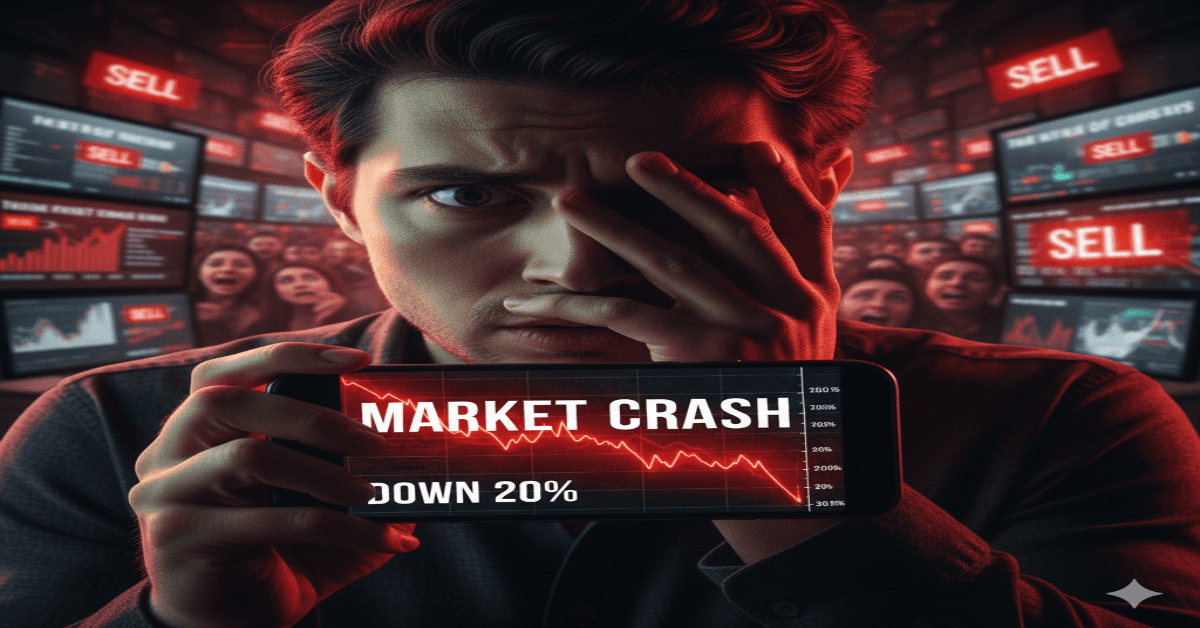
The Role of Emotions in Stock Market Crashes:
The Role of Emotions in Stock Market Crashes:
Many people refer to stock markets as the beating heart of contemporary economies. They fluctuate in tandem with government policies, interest rates, and earnings reports. However, under the surface of financial figures and charts is an indisputable fact: emotions are a major factor in stock market movements, especially during crashes.
The psychology of investors—fear, greed, panic, and overconfidence—often speeds up drops, even though analysts may point to economic triggers. For regular investors who want to manage volatility as well as financial professionals, it is essential to comprehend these feelings.
HSBC Cashback Credit Card 2025 – Benefits, Rewards & How to Apply?

How Market Crashes Are Caused by Emotions
The logical assumption is that investors will evaluate the fundamentals—earnings, cash flow, and long-term outlook—when stock prices drop precipitously. But history demonstrates that common sense frequently takes a backseat. Rather, trading floors and brokerage apps are dominated by emotions.
- The most potent factor in a collision is fear. Fear spreads quickly as investors worry about losing their life savings. Selling accelerates as panic sets in.
- Greed – In boom periods, greed pushes investors to overvalue stocks. This creates bubbles that eventually burst, leading to sharp downturns.
- Herd Mentality – People imitate others, assuming the crowd knows best. During crashes, this leads to mass sell-offs.
- Overconfidence – Many traders believe they can “time the market.” This hubris often backfires when the downturn deepens.
Market Panic Explained by Behavioral Finance
According to conventional economic theory, investors behave rationally. However, the study of behavioral finance, which was started by Amos Tversky and Daniel Kahneman, demonstrates that people behave irrationally when they are under pressure.
Important ideas include:
- Loss Aversion: Panic selling occurs when investors are more afraid of losses than they are of gains.
- Confirmation bias is when people look for information that confirms their worries, which makes them more anxious.
- Accessibility Heuristic: Investors tend to overestimate the likelihood of a recurrence since dramatic events, such as the 2008 crash, are still fresh.
Because of these biases, markets frequently overreact to negative news.
Historical Instances of Stock Crashes Caused by Emotions
The Great Depression (1929)
- Speculative bubbles and highly leveraged investments are the trigger.
- 9-E8motional factor: Confidence completely collapsed due to fear and uncertainty.
- As a result, markets experienced an almost 90% decline in value.
The 1987 Black Monday
- Trigger: Overvaluation and program trading.
- Emotional factor: Herd mentality fuels panic selling.
- Result: In one day, the Dow Jones fell 22%.
The Bubble of Dot-Com (2000)
- Tech stock overvaluation is the trigger.
- Emotional factor: Unsustainable investments in unsuccessful businesses were motivated by greed.
- Result: Over a two-year period, the Nasdaq plummeted 78%.
The 2008 Global Financial Crisis
- The collapse of subprime mortgages is the trigger.
- Emotional factor: Stock sell-offs and widespread withdrawals were caused by fear of bank failures.
- Result: Trillions of dollars were lost by global markets.
The 2020 COVID-19 Crash
- Economic shutdowns brought on by pandemics are the trigger.
- Fear of the unknown is an emotional aspect.
- Result: Within a month, the S&P 500 dropped 34% before rising again.
How Investors Can Manage Emotions During Crashes
While no one can eliminate emotions, investors can develop strategies to reduce their impact:
- Long-Term Perspective – Remember that markets historically recover after crashes.
- Diversification – Spread investments across sectors and asset classes to reduce risk.
- Set Stop-Loss Orders – Automate selling to avoid panic-driven decisions.
- Avoid Constant Monitoring – Checking prices hourly increases stress and impulsive moves.
- Follow Data, Not Rumors – Base decisions on fundamentals, not fear-driven headlines.
- Have a Financial Plan – Predefined strategies prevent rash emotional reactions.
Global Implications of Emotional Trading
Stock crashes don’t just hurt investors—they ripple across economies.
- Consumer Confidence Declines: Fear spreads beyond Wall Street, affecting spending.
- Corporate Layoffs: Companies cut costs as stock values decline.
- Government Intervention: Central banks often step in with stimulus to calm fears.
Thus, the emotions of millions of investors can shape global economic health.
In Conclusion
Stock market crashes are emotionally driven psychological storms rather than just economic occurrences. Balance sheets and GDP figures are often less important than fear, greed, and herd mentality.
The main takeaway for investors is obvious: regulating and comprehending emotions is just as crucial as examining financial data. Investors can endure volatility and make logical decisions—even in the middle of chaos—by using behavioral finance ideas and exercising discipline.
The Role of Gratitude in Personal Finance: How Thankfulness Builds Wealth and Financial Well-Being
The Role of Gratitude in Personal Finance: How Thankfulness Builds Wealth and Financial Well-Being