 A K
A K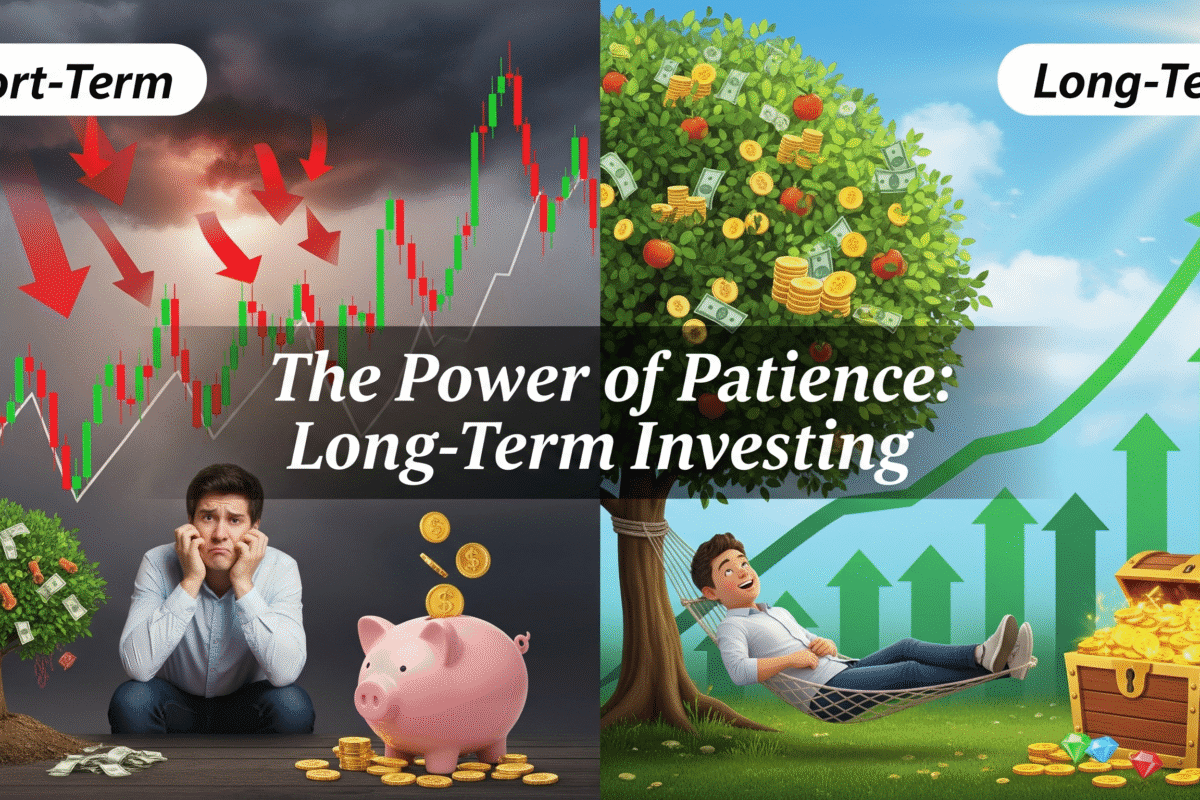
The Benefits of Long-Term Investing:
The Benefits of Long-Term Investing:
It can be tempting to pursue short-term gains in a world where investors are inundated with daily stock updates, market forecasts, and viral trading trends, all of which are controlled by instant pleasure. Long-term investing, however, continues to be the most dependable route to wealth accumulation and financial security, as history and financial studies have repeatedly demonstrated.
This article examines the various advantages of long-term investing, the importance of patience in the financial markets, and the ways in which people can make calculated plans for a safe future.
HSBC Cashback Credit Card 2025 – Benefits, Rewards & How to Apply?

What Is Long-Term Investing?
Long-term investing refers to buying and holding assets for years or even decades, instead of trading frequently. While short-term traders try to profit from daily price movements, long-term investors focus on fundamentals and allow their investments to grow over time.
Key Characteristics of Long-Term Investing:
- Investment horizon of 5–30+ years
- Focus on stable returns rather than quick profits
- Relies on compound growth
- Reduces the impact of short-term market volatility
Compounding: The Eighth Wonder of the World
Albert Einstein reportedly called compound interest the “eighth wonder of the world.” When you reinvest your returns, they begin generating earnings of their own.
Example of Compounding:
- If you invest $10,000 at an average annual return of 8%, after 30 years, your portfolio grows to nearly $100,000.
- The same money left for 40 years grows to $217,000.
This exponential growth shows why time in the market beats timing the market
Market Resilience Reduces Risk
In the short term, markets are unpredictable. Sudden declines could be brought on by a pandemic, recession, or political catastrophe. But historically, the market has been trending upward over decades.
For instance:
- Since its launch in 1928, the S&P 500 Index has generated an average yearly return of almost 10%.
- Markets recovered and rewarded patient investors even after significant falls (the Great Depression, the 2008 financial crisis, and the COVID-19 slump).
Long-term investors weather market turbulence and reap the rewards of general expansion.
Long-Term Investing Encourages Discipline
Short-term trading often leads to emotional decisions, such as panic selling during downturns or chasing “hot stocks.” Long-term investors, however, develop discipline:
- Staying invested during downturns
- Avoiding speculative bubbles
- Maintaining consistent contributions
This discipline often results in better returns than those achieved by active traders.
Reduced Expenses and Greater Profits
Higher transaction fees and taxes result from frequent trading. Long-term investors, on the other hand, retain assets for years in order to reduce expenses.
Long-term investing’s tax benefits include:
- Long-term capital gains tax rates (0%, 15%, or 20%) are lower than short-term rates.
- Tax advantages are also provided by qualified dividends and retirement funds (401(k), IRA).
Over decades, these savings significantly boost overall returns.
Retirement Planning and Financial Security
Retirement security is among the most useful advantages of long-term investing. Financial freedom later in life is ensured by making regular contributions to retirement accounts such as a traditional IRA, Roth IRA, or 401(k).
A 25-year-old who invests just $500 per month at a 7% return could retire at 65 with over $1.2 million.
This demonstrates how retirement wealth is built via time, consistency, and compounding.
Outpacing Inflation
Inflation slowly erodes the purchasing power of money. Leaving cash in a savings account that earns 1–2% interest fails to keep up with average inflation (around 3% annually).
Long-term investing in equities, real estate, or other growth assets historically outpaces inflation, preserving and growing wealth.
Creating Wealth and Passive Income
Bond interest, dividends, and rental property cash flow are all ways that long-term investments can produce passive income. This revenue:
- enhances earnings during the working years
- enables retirement financial independence
- permits reinvestment to achieve compound growth.
Wealth building becomes much easier when income works for you instead of you working for income.
Psychological Benefits: Peace of Mind
Constantly watching stock prices is stressful. Long-term investing reduces anxiety because:
- Investors don’t need to track daily market swings.
- A long-term strategy eliminates the pressure of “perfect timing.”
- It builds financial confidence over time.
Peace of mind is often overlooked but is a valuable benefit of patient investing.
Historical Examples and Case Studies
Warren Buffett’s Philosophy
One of the finest investors in the world, Warren Buffett, is renowned for saying:
“The purpose of the stock market is to move funds from the Active to the Patient.”
Buffett’s prosperity is a result of his decades-long ownership of profitable companies.
The Financial Crisis of 2008
Investors who panicked and sold in 2008 often missed the market rebound. However, those who continued to invest made up their losses and took advantage of one of the longest bull markets ever.
S&P 500 Example
If you invested $10,000 in the S&P 500 in 1980 and left it untouched, it would be worth over $700,000 today, despite crashes and downturns along the way.
How to Start Long-Term Investing
- Set Clear Goals – Retirement, education, or wealth accumulation.
- Choose the Right Accounts – 401(k), IRA, brokerage account.
- Diversify – Spread investments across stocks, bonds, and real estate.
- Invest Consistently – Use dollar-cost averaging.
- Stay Patient – Resist the urge to time the market.
Risks of Long-Term Investing
While long-term investing is safer than short-term speculation, risks exist:
- Poor stock selection
- Overconcentration in one asset
- Unexpected life events requiring liquidity
Mitigation strategies include diversification, emergency savings, and periodic portfolio reviews.
The Future of Long-Term Investing
With advancements in fintech, robo-advisors, and low-cost ETFs, long-term investing is now more accessible than ever. Younger generations, especially millennials and Gen Z, have tools that previous investors lacked.
The growing emphasis on sustainable investing (ESG) also shows that long-term wealth can align with long-term societal goals.
Conclusion
The benefits of long-term investing are clear:
- Wealth growth through compounding
- Reduced risk and market resilience
- Lower taxes and costs
- Retirement security
- Passive income and financial peace of mind
In an era where short-term speculation dominates headlines, the smartest move for most investors is to embrace patience. By focusing on decades, not days, long-term investors give themselves the best chance to achieve financial freedom.
The Envelope System: Old but Effective Way to Budget in 2025?
The Envelope System: Old but Effective Way to Budget in 2025?