 A K
A K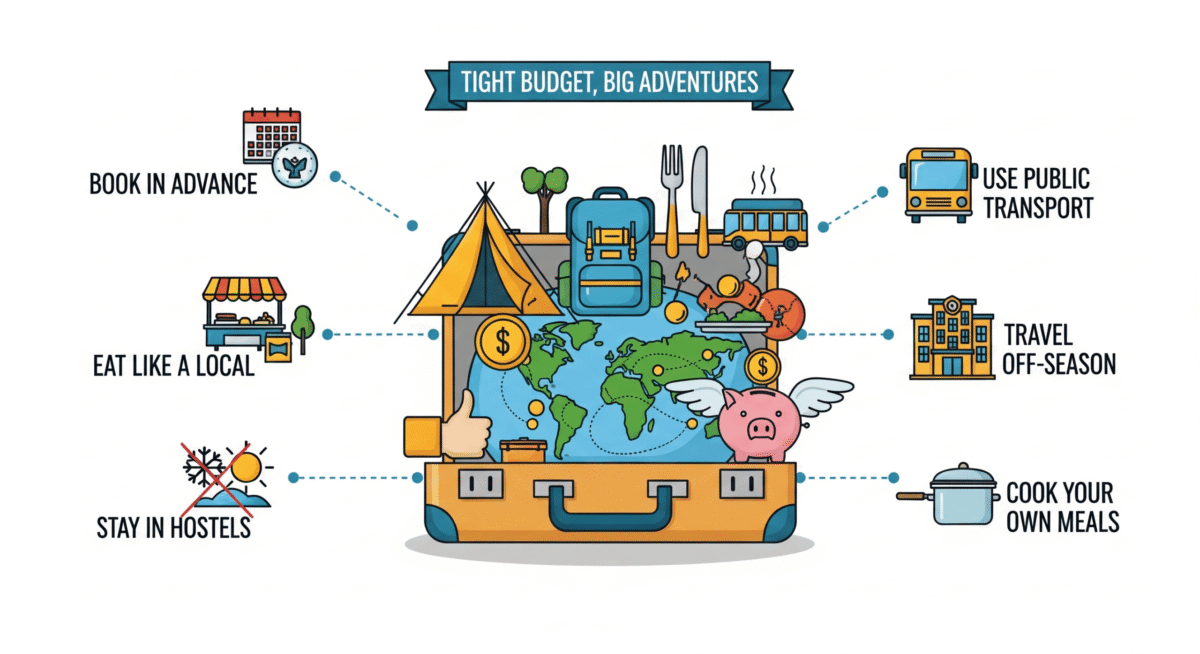
How to Travel on a Tight Budget in 2025?
How to Travel on a Tight Budget in 2025?
One of the greatest pleasures in life is travel. Exploring new places, meeting people from different cultures, and tasting unfamiliar cuisines can enrich our lives in ways nothing else can. But for many Americans, especially in today’s economy, the rising costs of flights, hotels, and meals make vacations feel out of reach.
The good news is that traveling doesn’t always have to drain your wallet. With the right strategies, careful planning, and a willingness to be flexible, you can explore the world on a budget without sacrificing the quality of your experience.
In this comprehensive guide, we’ll explore practical, real-world ways to travel affordably in 2025, covering transportation, accommodations, food, activities, and insider hacks that seasoned budget travelers swear by.
HSBC Cashback Credit Card 2025 – Benefits, Rewards & How to Apply?

1. Planning Ahead: The Foundation of Budget Travel
The first and most important rule of traveling on a tight budget is planning ahead. Last-minute bookings often come with premium price tags, while early planning opens up opportunities for discounts and better deals.
- Set a travel budget early: Decide how much you can realistically spend, and break it down into categories like transportation, lodging, food, and activities.
- Be flexible with dates: Flying mid-week, off-season, or during shoulder months (right before or after peak season) can save you hundreds.
- Use flight comparison sites: Platforms like Google Flights, Skyscanner, and Momondo allow you to compare multiple airlines and find the cheapest routes.
2. Finding Affordable Flights
The largest trip expense is frequently airfare. But with some smart strategies, you can significantly reduce the cost of your ticket.
- Book at the right time: Studies show the cheapest time to book domestic flights is 1–3 months in advance, and for international flights, 2–6 months ahead.
- Fly budget airlines: Carriers like Spirit, Frontier, and Southwest (for U.S. travel) or Ryanair, EasyJet, and AirAsia (for international trips) offer low-cost alternatives.
- Use hidden city ticketing: Websites like Skiplagged help you find flights with stopovers at your destination, often cheaper than direct flights.
- Leverage travel rewards: Credit cards with travel rewards points or airline miles can cover part—or sometimes all—of your flight costs.
3. Low-Cost Lodging Tricks
A large amount of your trip budget may be consumed by lodging. Fortunately, there are more affordable hotel options than ever before.
- Hostels: Ideal for groups or lone travelers, these accommodations provide dormitory-style beds at a significantly lower cost than hotels.
- Airbnb & Vacation Rentals: If you can prepare your own meals, renting a room or apartment is frequently less expensive than staying at a hotel.
- Couchsurfing: A community-based website where residents give away their homes to tourists.
- Travelers and homeowners seeking someone to care their houses or pets can contact through websites such as TrustedHousesitters.
- Camping and RV travel are reasonably priced options for those who enjoy the outdoors, particularly in the United States, where national parks offer reasonably priced camping areas.
4. Traveling and Saving Money on Food
Trying the local food is one of the best aspects of traveling. However, three restaurant meals a day quickly mount up. Here’s how to eat delicious cuisine and save money:
- Local markets and street food are frequently more genuine, less expensive, and fresher than eateries frequented by tourists.
- Prepare your own food by shopping at supermarkets and preparing easy meals in the kitchen of your hostel or Airbnb.
- Ask locals where they eat; it’s typically less expensive and more genuine than tourist-oriented establishments.
- Lunch specials: While supper costs are higher, many eateries offer cheaper lunchtime meals.
- Avoid overspending on alcohol: Drinks can rapidly break the bank, so limit your use of alcohol to exceptional occasions or stick to local breweries.
5. Transportation on a Budget
Getting around once you reach your destination doesn’t have to be expensive.
- Public transportation: Buses, subways, and trams are almost always cheaper than taxis or ride-shares.
- Walk or bike: The cheapest and healthiest way to explore a city. Many destinations now offer bike-sharing services.
- Travel passes: In cities like New York, London, and Tokyo, multi-day passes for unlimited rides save money.
- Overnight buses & trains: Kill two birds with one stone—transportation plus a night’s accommodation.
- Carpooling & ridesharing apps: Platforms like BlaBlaCar in Europe make long-distance travel more affordable.
6. Low-Cost and Free Activities
Budget travel does not have to entail sacrificing experiences. Some of the most unforgettable experiences are inexpensive or free.
- Free walking tours: “Pay what you can” walking tours are available in several cities.
- Free day museums: Look for days when entry is free or when students can get a discount on museum websites.
- Nature and outdoor pursuits: Public parks, beaches, and hiking are nearly always free.
- Local festivals and events: Look for fairs, parades, and cultural events on the calendars in your area.
- Self-directed tours: Rather than paying for guided tours, learn about locations by using free apps or podcasts.
7. Low-Cost Travel Insurance
In an attempt to save money, many tourists forego insurance, which can prove to be an expensive error. Your vacation could become a financial nightmare due to medical problems, cancellations, or misplaced luggage.
Low-cost insurance companies like SafetyWing and World Nomads provide plans that are suitable for both short-term and long-term travel. To make sure you’re getting the greatest deal, always compare policies.
8. Budget Travel in the United States.
If you steer clear of tourist traps and search for alternate sites, domestic travel in the United States doesn’t have to be costly.
- Investigate national parks: Over 2,000 parks and government sites are accessible with an annual pass that costs $80.
- Small towns over large cities: Visit undiscovered treasures like Asheville, North Carolina, or Boise, Idaho, rather than New York or San Francisco.
- Road trips: It may be less expensive to drive your own vehicle and camp along the route rather than take a plane and stay in a hotel.
9. International Budget Travel in 2025
Certain destinations naturally offer better value for travelers on a tight budget.
- Affordable destinations: Mexico, Vietnam, Portugal, Thailand, and Eastern Europe remain budget-friendly.
- Digital nomad hubs: Cities like Bali, Medellín, and Lisbon cater to remote workers with affordable long-term stays.
- Visa-free destinations: Save on costs by traveling to countries where U.S. citizens don’t need a visa.
10. Using Money Wisely When Traveling
Effective money management when traveling guarantees that you won’t go over budget.
- Make use of travel cards that don’t charge foreign exchange costs.
- To prevent recurring ATM fees, take out bigger quantities of cash.
- Use applications like Mint or Trail Wallet to keep tabs on your expenditures.
- Set aside money each day to ensure you stay within your daily budget.
11. Low-Cost Family Vacations
Budget travel with children needs more preparation, but it is feasible.
- Family savings: Seek for group passes for attractions and transit.
- Bring snacks and necessities: Avoid buying overpriced items at tourist sites.
- Choose family-friendly destinations with free activities like beaches or public parks.
12. The Attitude of an Inexpensive Vacationer
Lastly, having the correct attitude is essential when traveling on a limited budget. It is crucial to be adaptable, patient, and creative. Put more emphasis on experiences than luxuries.
Doing more with less is the goal of budget travel, not doing less.
Concluding Remarks
Not only is it feasible to travel on a small budget in 2025, but it may even be more fulfilling than a lavish vacation. Embracing resourcefulness allows you to appreciate every dollar spent, find hidden treasures, and establish deeper connections with local cultures.
These tips, which range from finding inexpensive flights and lodging to taking advantage of free activities and dining like locals, demonstrate that having a meaningful trip doesn’t have to cost a fortune.
Thus, prepare to see the world without going over budget by packing your baggage and making wise plans.
The Role of AI Technology in Healthcare: Transforming Patient Care in 2024
The Role of AI Technology in Healthcare: Transforming Patient Care in 2024